Stereotactic body radiation therapy (SbRT) is a type of external beam radiation therapy where high doses of radiation are delivered to small, well-defined cancers (targets). SbRT is given between one to five radiation treatments (fractions). One of the main advantages of SbRT is that this technique precisely delivers the radiation to the target while sparing the surrounding normal tissues. SbRT can be used to treat many different cancers, including prostate, lung, liver, pancreas, bone, lymph nodes, breast, kidneys, head and neck, and other tissues. It can be used for both cancerous and noncancerous targets. When SbRT is delivered to tumors in the brain it is called stereotactic radiosurgery (SRS).
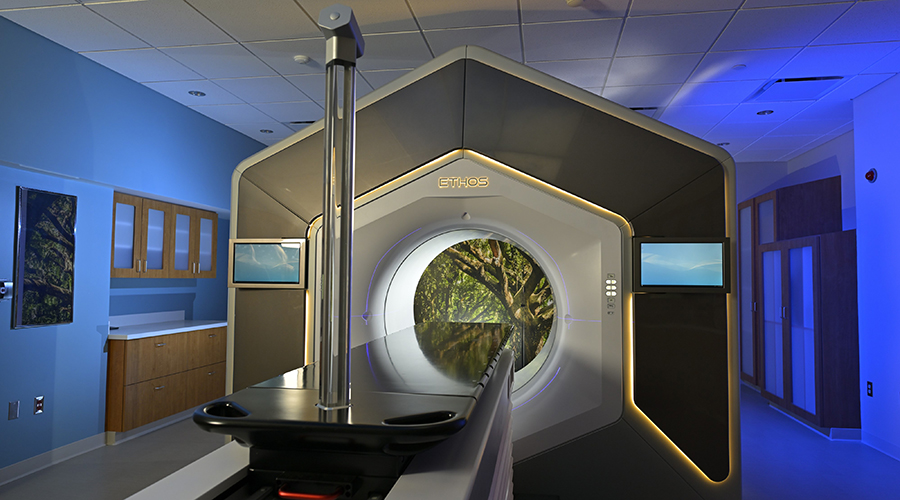
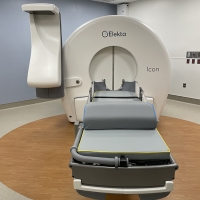
SbRT and SRS can be delivered at all the sites (Cottman, Buckingham, East Norriton and Temple University Hospital) in the Fox Chase Cancer Center Department of Radiation Oncology on all our modern linear accelerators (linacs). SbRT can be given at each site on our Ethos and other Varian linacs, and the VersaHD and Harmony linacs. SbRT treatment on the Ethos linac is called adaptive radiation therapy. SRS is given on the GammaKnife and the BrainLab equipped VersaHD. SbRT treatment given on the Varian Ethos linac is called adaptive radiation therapy.