
Five Treatments, One Personalized Plan: How Adaptive Radiation Is Changing Prostate Cancer Care
-
By Mark A. Hallman, Associate Professor, Department of Radiation Oncology, Clinical Director, GU Service Line
Radiation therapy for prostate cancer has changed a great deal. Some patients can now finish treatment in fewer visits. The next step is making each visit more personal.
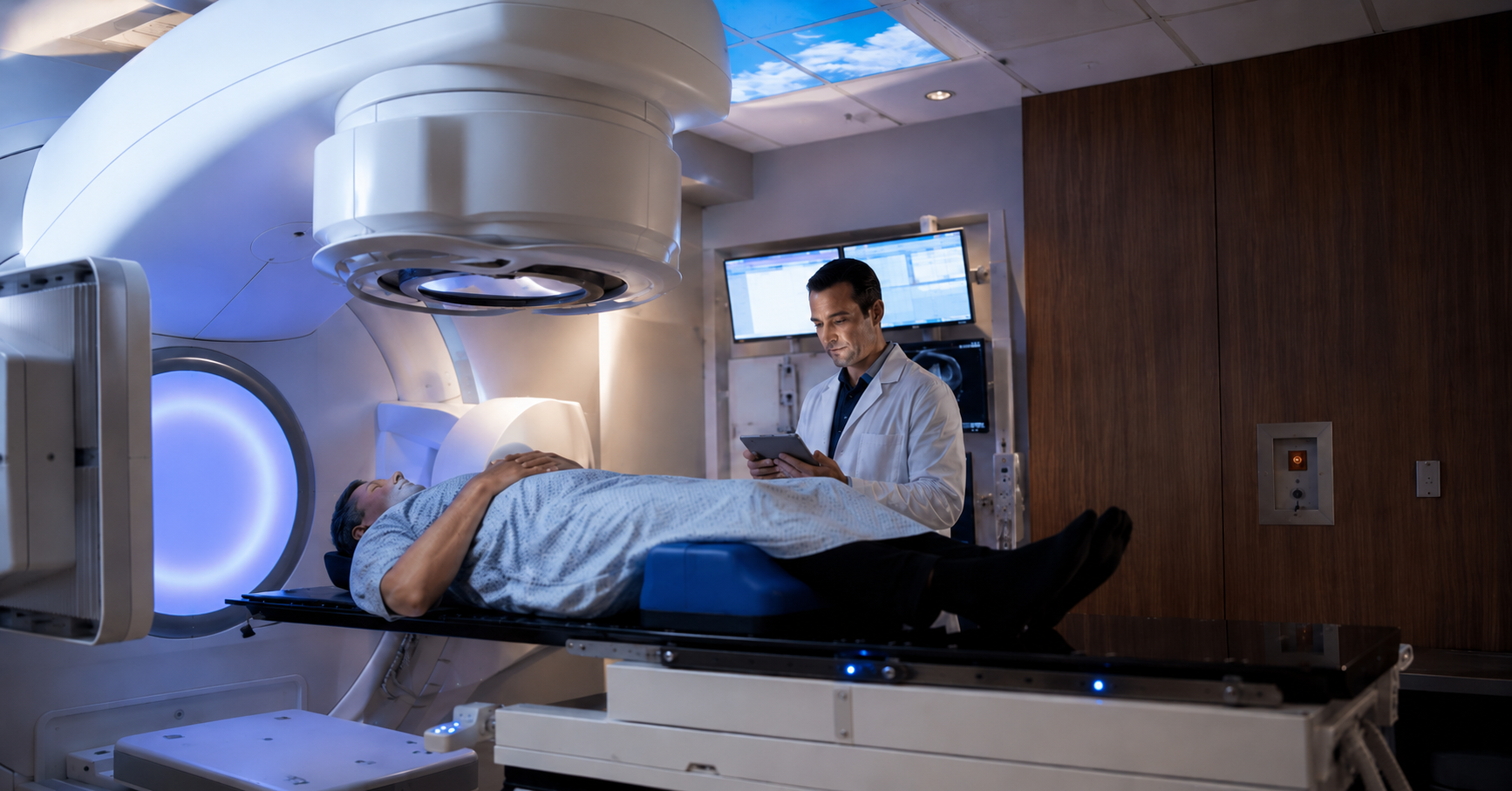
At Fox Chase, we are studying adaptive stereotactic body radiation therapy, or adaptive SBRT. SBRT is a highly focused form of external beam radiation therapy that uses X-rays to treat the prostate from outside the body. It is given in five sessions over about two to three weeks, and before each session, the treatment plan can be adjusted to match the patient’s body that day.
Why Would a Radiation Plan Need to Change?
The prostate does not stay in the same spot every day. The bladder and rectum can fill or empty. This can shift nearby organs. The initial radiation treatment plan may not fit the body in the same way later.
Adaptive radiation uses high-resolution images taken at the treatment machine. They show where the prostate and nearby organs are that day. The team can update the plan before giving radiation. The goal is to focus the dose on cancer and protect the mobile healthy tissue when possible.
What Does SBRT Mean?
SBRT gives a higher dose during each visit with great precision. Since each visit gives more treatment, the full course can be much shorter.
Fox Chase has long helped develop shorter radiation schedules for prostate cancer. Adaptive SBRT builds on that work by allowing the plan to respond to daily changes in the body.
What Is the DE-CART Trial?
DE-CART is a Fox Chase clinical trial for adults with intermediate-risk or favorable high-risk prostate cancer who meet the study requirements. Participants receive adaptive SBRT every other weekday for a total of five treatments.
This is an early study. Its main goal is to find a safe dose and track side effects. It will also look at cancer control, urinary and bowel symptoms, and quality of life. The study treatment delivers higher doses than can be safely achieved with traditional non-adaptive SBRT. This may prove to be a more effective treatment for prostate cancer.
Read the DE-CART clinical trial overview or learn more about clinical trials at Fox Chase.
What Patients Should Know
A five-treatment plan can be appealing. But shorter does not mean simple. Careful imaging and planning are still key. SBRT and this trial are not right for every patient.
Before we recommend radiation, we review the cancer stage, risk group, prostate size, urinary symptoms, scans, health, and goals. Some patients also need hormone therapy. Others may do better with surgery, another type of radiation, or active surveillance.
Explore the full range of prostate cancer treatment options at Fox Chase.
Why This Research Matters
The future of radiation is not only shorter treatment. It is treatment that responds to the patient in real time. Adaptive therapy may help us give a strong dose to the prostate while protecting the bladder, rectum, and nearby tissue.
We still need to test that promise with care. Clinical trials help us measure side effects and learn which patients benefit most.
To ask whether radiation therapy or a prostate cancer clinical trial may be right for you, request an appointment or call 888-FOX-CHASE (888-369-2427).