
Theranostics and Pluvicto: A More Personalized Approach to Advanced Prostate Cancer
-
By Matthew Zibelman, MD, Director, Clinical and Translational Research, GU Service Line and Fern M. Anari, MD, Associate Professor, Department of Hematology/Oncology
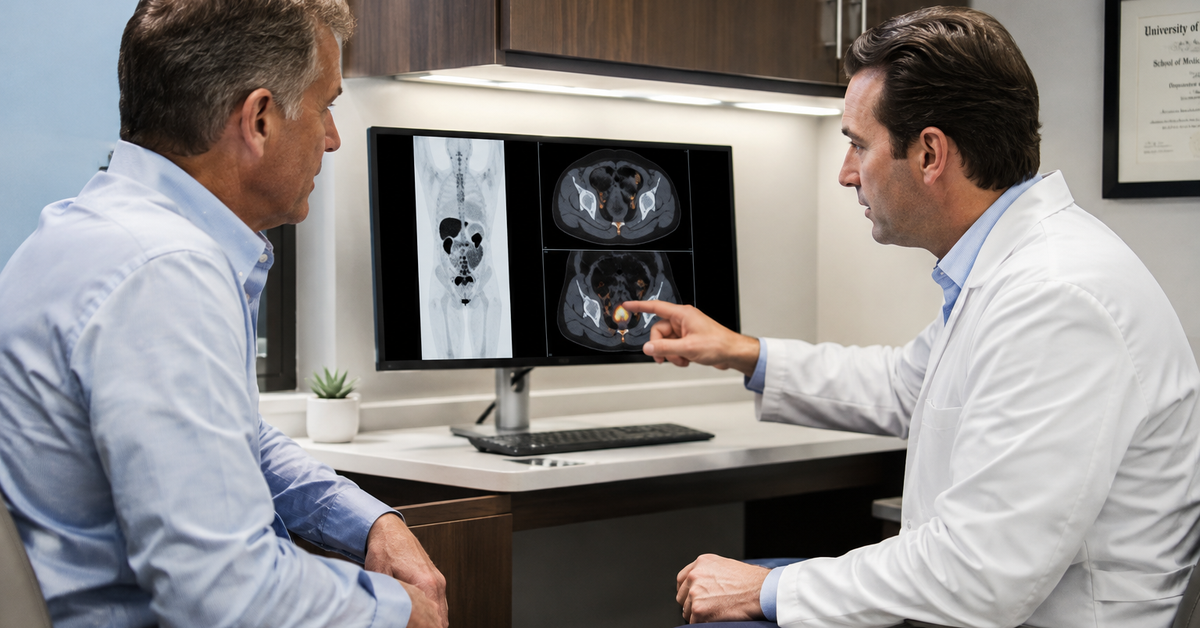
Theranostics is a newer strategy in cancer care that combines precision imaging with targeted treatment to create a more personalized plan. In prostate cancer, a PSMA PET scan can show whether cancer cells carry a specific target. If they do, a matched treatment such as Pluvicto may deliver radiation directly to those cells.
By focusing treatment on a marker found on cancer cells, theranostics may help improve outcomes while limiting exposure to nearby healthy tissue. This can help reduce side effects and may offer another treatment option for some men with advanced prostate cancer.
What Is Theranostics?
Theranostics pairs a diagnostic scan with a treatment designed to attach to the same target. The scan shows whether the target is present and where it appears in the body. If the target is found, doctors can determine whether a matched treatment may be appropriate.
In prostate cancer, the target is prostate-specific membrane antigen (PSMA), a protein found at high levels on most prostate cancer cells. A PSMA PET scan uses a small amount of tracer that attaches to PSMA, causing cancer cells to light up on the scan.
Learn more about prostate cancer diagnosis and treatment at Fox Chase.
Where Pluvicto Fits
Pluvicto is a targeted radiopharmaceutical therapy, sometimes described as a type of "liquid radiation." It carries a radioactive material called lutetium-177 directly to prostate cancer cells by attaching to PSMA on their surface. Once attached, Pluvicto releases radiation at the site of the cancer. Because the radiation travels only a short distance, it can damage cancer cells while limiting exposure to nearby healthy tissue and helping reduce side effects.
luvicto is approved for selected adults with PSMA-positive metastatic prostate cancer. It may be used when the cancer continues to grow despite low testosterone. In select patients with metastatic hormone-sensitive disease, it may also be considered as part of initial treatment with hormone-based therapy. A PSMA-targeted PET scan helps show whether the cancer has enough PSMA for treatment. The right timing depends on the disease setting, past treatment, overall health and the patient's goals.
Pluvicto is not right for every person with advanced prostate cancer. We review blood counts, kidney health, past treatment, symptoms, and scan results. Side effects can include tiredness, dry mouth, nausea, low blood counts, and kidney problems. We discuss these risks and watch patients closely.
Why Team-Based Care Matters
Theranostics is more than one scan or one drug. It requires a team effort that includes medical oncology, nuclear medicine, nursing, pharmacy and radiation safety. Together, the team confirms the target, chooses the right time, provides treatment safely and tracks the response.
Fox Chase was named Philadelphia’s first Comprehensive Radiopharmaceutical Therapy Center of Excellence by the Society of Nuclear Medicine and Molecular Imaging. This reflects the training, staff, equipment, and safety systems needed to provide radiopharmaceutical therapy.
A Growing Area of Prostate Cancer Care
Theranostics is changing quickly. Researchers are testing new PSMA-targeted drugs and new ways to deliver radiation through an infusion. They are also studying how to combine these approaches with other treatments. Clinical trials may help show who benefits most and when to use them.
Patients with advanced prostate cancer can review prostate cancer treatment options and urologic cancer clinical trials available at Fox Chase.
A PSMA PET scan does not mean a patient should receive Pluvicto. The scan gives us one part of the picture. We combine it with past treatment, overall health, and the patient’s goals before making a plan.
To speak with a Fox Chase prostate cancer specialist, request an appointment or call 888-FOX-CHASE (888-369-2427).