Researchers at Fox Chase Cancer Center have identified a promising new approach to rebuilding tissue after skin cancer surgery that could help some patients avoid more extensive reconstructive procedures.
Published in Plastic and Reconstructive Surgery – Global Open, the study is the largest published case series to date evaluating the DermiSphere® Hydrogel Dermal Regeneration Template from Fesarius Therapeutics, a hydrogel-based template, which serves as a scaffold that encourages the body's own cells to regenerate healthy tissue.
A Potentially Less Invasive Option for Complex Wounds
Reconstructing full-thickness wounds after cancer removal often requires skin grafts or more extensive flap reconstruction, procedures that can create additional wounds and prolong recovery. Although dermal regenerative templates have expanded reconstructive options, many existing products require weeks before surgeons can complete reconstruction.
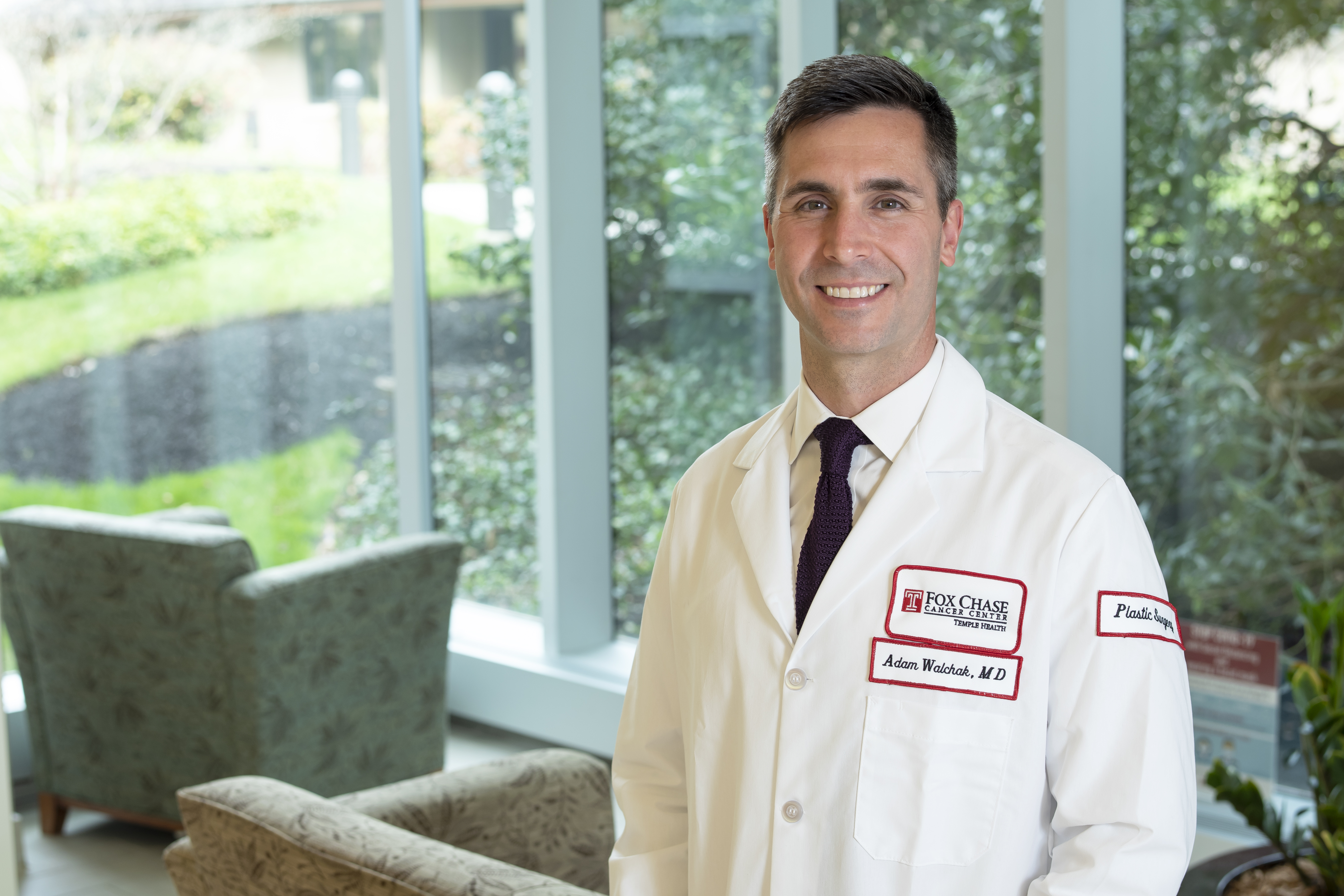
"We're always looking for ways to restore both form and function using the least invasive approach possible," said Adam C. Walchak, MD, senior author on the study and Assistant Professor in the Department of Surgical Oncology at Fox Chase. "Having another reconstructive option allows us to tailor treatment to each patient's needs while potentially reducing the morbidity associated with more extensive procedures."
Researchers evaluated the DermiSphere® Hydrogel Dermal Regeneration Template in 10 patients with 13 wounds involving the face, scalp and extremities following skin cancer surgery, trauma or tissue donor-site reconstruction. The template rapidly developed its own blood supply, allowing wounds to heal with immediate skin grafting, delayed skin grafting or, in select cases, without grafting. Patients experienced favorable healing and cosmetic outcomes with no major complications related to the template.
"Our goal is always to improve patient outcomes while minimizing the burden of reconstruction," said Sameer A. Patel, MD, FACS, Chief of the Division of Plastic and Reconstructive Surgery at Fox Chase. "Our early experience suggests this technology can help us achieve excellent functional and aesthetic outcomes while, in carefully selected patients, avoiding larger reconstructive procedures."
Expanding Reconstructive Possibilities
The study also demonstrated a novel application for radial forearm free flap donor sites, which are commonly created during head and neck cancer reconstruction and can be prone to complications. The researchers found the template could help protect exposed tendons and nerves while providing durable wound coverage.
From Discovery to Patient Care
Coauthor Opeyemi Asanbe, MD, participated in early laboratory research that helped lay the groundwork for the technology while she was a post-doctoral researcher. She later joined the Temple Health faculty and helped evaluate the use of the template in patients.
"At Fox Chase, we're focused on both discovery and delivery," Patel said. "Research drives innovation, and our responsibility is to bring promising advances to patients as quickly and thoughtfully as possible. While this technology doesn't treat cancer itself, it has the potential to improve quality of life by helping us better manage the reconstructive challenges that can follow cancer treatment."
The researchers noted that this was an early pilot study. Larger studies with longer follow-up are needed to compare the technology with existing reconstructive approaches and determine which patients are most likely to benefit.