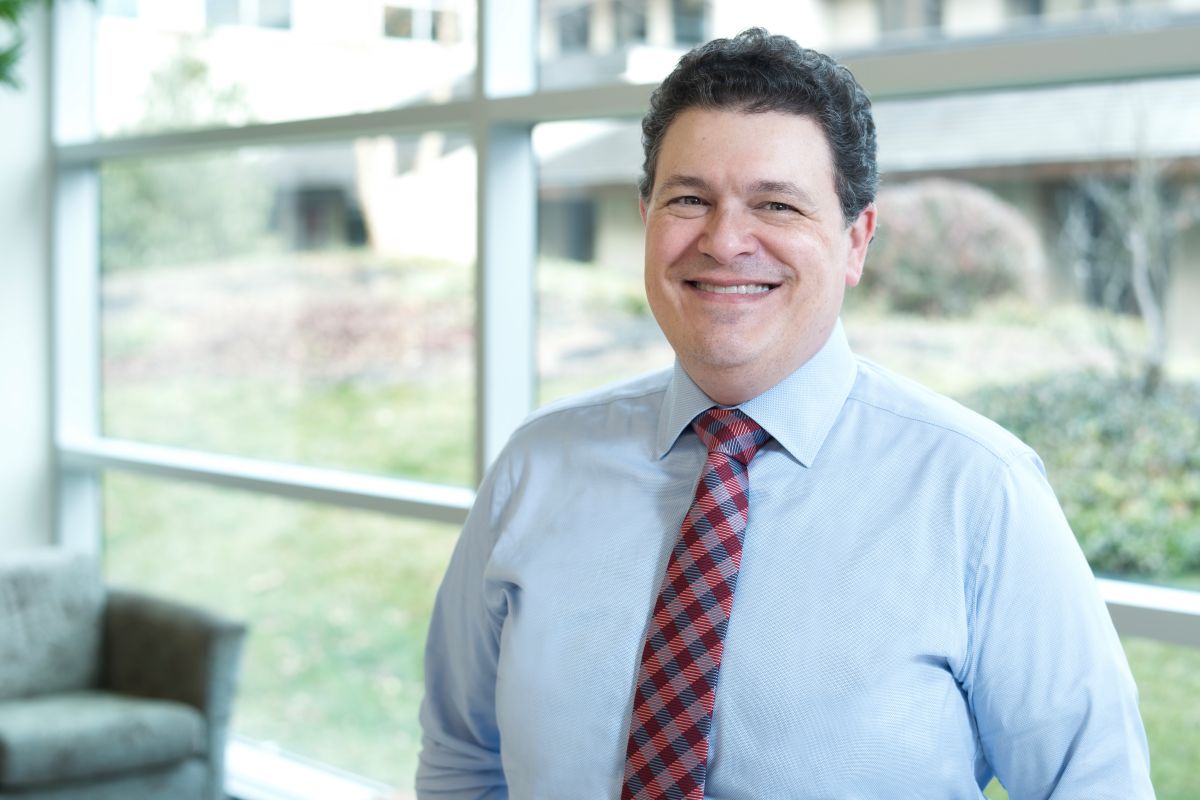
PHILADELPHIA (February 16, 2026) — Temple Health and Fox Chase Cancer Center are pleased to announce the hiring of James Stuart Ferriss, MD, FACOG, FACS, as System Chief of Gynecologic Oncology at Temple Health and Fox Chase Cancer Center. Ferriss, who will also be an Associate Professor of Gynecologic Oncology, who will see patients at Temple University Hospital, Fox Chase, and Fox Chase – Chestnut Hill
Ferriss returns to Temple Health with more than two decades of experience as a clinician, educator, researcher, and national leader in gynecologic oncology. Earlier in his career, he spent six years at Temple University Hospital, where he held multiple leadership roles in clinical care, resident and fellow education, robotic surgery, and program development. His return marks both a professional milestone and a personal homecoming.
“Temple is where so many of my core professional values were shaped. I was there before Fox Chase became part of Temple Health, through the early days of that transition, and during the formation of the gynecologic oncology fellowship. Coming back now, with a unified vision and a true one-team approach, is incredibly meaningful to me,” said Ferriss.
“Dr. Ferriss is a nationally respected gynecologic surgical oncologist whose experience as a clinician, educator, and leader will be instrumental as we continue to strengthen and integrate gynecologic cancer care across Fox Chase Cancer Center and Temple Health,” said Jeffrey Farma, MD, FACS, Chair of the Department of Surgery at Fox Chase. “His commitment to collaboration, research, and patient-centered care aligns perfectly with our mission and vision.”
A Healthcare Family
Ferriss’s family was an early influence on his path to medicine. His father worked as a nurse for part of his career, and Ferriss spent summers accompanying him on rounds, gaining exposure to patient care, postsurgical recovery, and the realities of living with chronic illness. His mother worked in public health, giving him an early appreciation for the systems, access points, and community-level structures required to deliver effective care.
“From a very young age, I had an up-close view of how people actually live with disease, not just how we treat it in textbooks,” said Ferriss. “That perspective never left me. It’s a big part of why I focus so strongly on meeting patients where they are and tailoring care to the individual.”
Personalized Care
As a gynecologic oncologist, Ferriss was drawn to the specialty’s unique blend of complex surgery, long-term patient relationships, and medical oncology. Gynecologic oncologists are advanced pelvic surgeons who also administer chemotherapy, an uncommon dual role that allows for deeply personalized, continuous care.
“That duality really brought everything together for me,” he said. “It allows us to take a personalized approach for each patient, combining surgery, systemic therapy, screening, and cancer control measures in a way that’s cohesive and thoughtful. In many ways, it goes back to the same principles I absorbed growing up.”
A National Leader
Ferriss earned his bachelor’s degree in microbiology, graduating summa cum laude from Louisiana State University, and his medical degree from the Louisiana State University School of Medicine. He completed his residency in obstetrics and gynecology at UT Southwestern Medical Center and a fellowship in gynecologic oncology at the University of Virginia. Most recently, he served as Associate Professor at Johns Hopkins University, where he was Fellowship Program Director in Gynecologic Oncology and a national leader in surgical education and trainee development.
Throughout his career, Ferriss has been widely recognized for excellence in teaching, mentorship, and leadership. In 2025, he was named an Associate Member of the Academy of Master Surgeon Educators of the American College of Surgeons, a rare distinction, particularly for a gynecologic oncologist. He has also received multiple national teaching and leadership awards from the Society of Gynecologic Oncology and other professional organizations.
Strengthening Collaboration
In his new role, Ferriss will focus on strengthening collaboration across the Temple Health system, rebuilding and expanding the division’s research portfolio, advancing clinical trials, and ensuring equitable access to gynecologic cancer care across Philadelphia, particularly for historically underserved communities.
“We already provide outstanding, personalized care,” he said. “But there is always room to do better, especially when it comes to access, cancer control, and research. I want us to distinguish ourselves by working across the entire health ecosystem, not as separate sites, but as one integrated team delivering consistent, compassionate, high-level care.”
Ferriss also emphasized his commitment to education and mentorship, particularly for trainees. “Supporting the next generation of physicians through mentorship and sponsorship is essential,” he said. “Their success is ultimately what sustains excellence in patient care.”
With his return, Fox Chase Cancer Center and Temple Health continue to strengthen their leadership in gynecologic oncology, reinforcing a shared mission of innovation, education, and patient-centered cancer care.