- Only one retroperitoneal sarcoma (RPS) patient out of 22 achieved meaningful tumor shrinkage with pre-surgical radiation, while over 75% of the sample saw no significant change and 18% experienced tumor growth.
- The study confirms the results of the landmark STRASS trial, reinforcing the finding that receiving radiation prior to surgery does not improve outcomes for RPS patients.
- Even when tumors responded, radiation did not reduce surgical complexity, as there were no differences in operative time, blood loss, or organs removed.
PHILADELPHIA (January 14, 2026) — According to new research from Fox Chase Cancer Center, radiation therapy administered before surgery rarely produces favorable responses in patients with retroperitoneal sarcoma (RPS), a rare and aggressive cancer that forms in the abdomen. The study reinforces findings from a major international clinical trial and suggests that, due to ineffectiveness, radiation should not be used to shrink tumors before surgery.
Patients often don’t realize they have RPS until the disease has reached an advanced stage. As a result of delayed diagnosis, surgery is the primary treatment, and these operations can be highly complex because RPS tumors frequently invade vital organs like kidneys or major blood vessels.
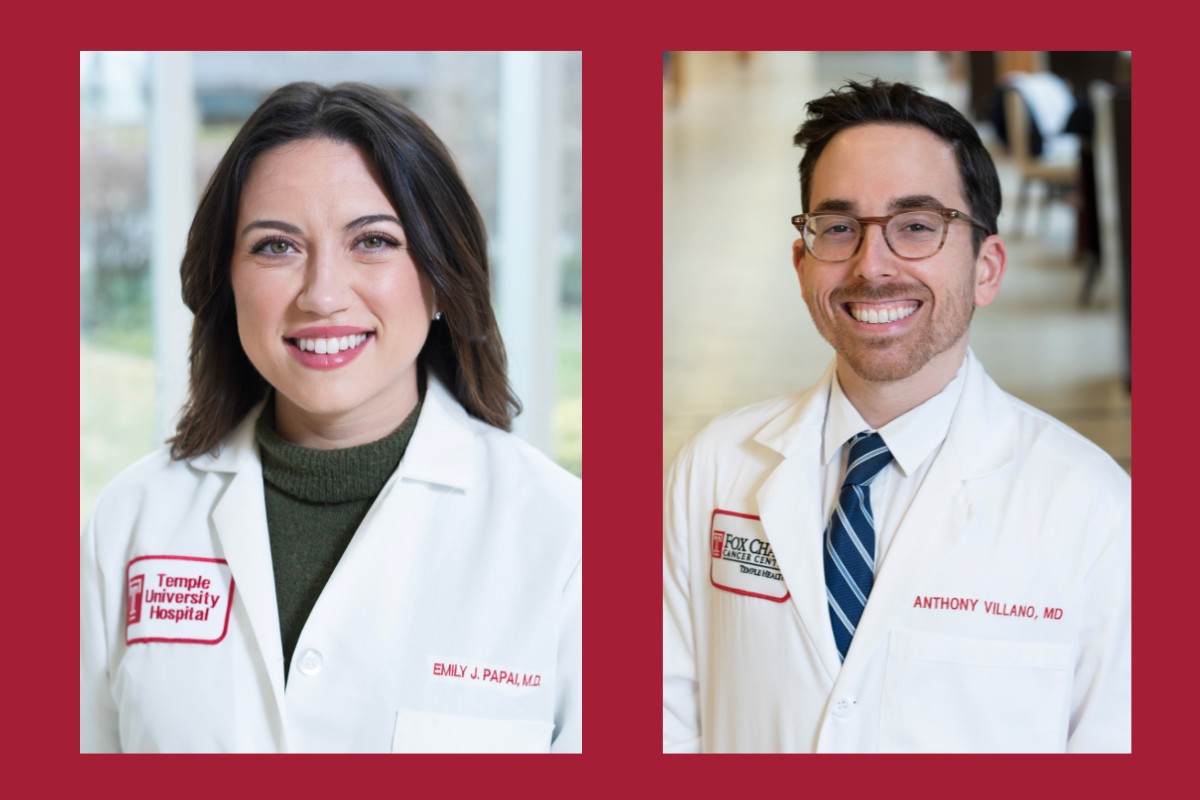
“The initial thought in the field was that if we give pre-surgical radiation, maybe that would help shrink the tumor size and make surgeries less morbid and less technically complicated and dangerous for patients,” said Emily Papai, MD, lead author on the study, general surgery resident at Temple University Hospital, and former Surgical Oncology Research Fellow at Fox Chase.
“But what we found is that the overwhelming majority of patients showed no response to radiation,” added Papai, who conducted the study with senior author Anthony M. Villano, MD, FACS, an Assistant Professor in the Department of Surgery at Fox Chase, and other Fox Chase colleagues
Key Findings
- Minimal tumor response: Only 1 patient (4.5%) experienced a partial response to pre-surgical radiation, with their tumor shrinking by more than 30%. The vast majority of patients (77.3%) had minimal change in tumor size.
- Tumor growth during treatment: Four patients (18.2%) experienced progressive disease, with tumors growing an average of 38% in diameter during radiation therapy.
- No surgical benefit: Radiation did not reduce surgical complexity. There were no differences in operative time, estimated blood loss, or number of adjacent organs removed between patients who responded to radiation and those who did not.
- No change in organ involvement: Among the 10 patients whose tumors radiographically touched or encased adjacent organs before radiation, none showed changes in organ involvement after treatment.
The study concluded that skipping preoperative radiation and moving patients directly to surgery, a practice supported by the current literature and followed at Fox Chase, is in most patients’ best interest.
“Patients whose disease is progressing or who are seeing no difference are simply waiting for surgery,” Papai said. “Especially for patients who are anxious to get the cancer out of their bodies, they could have better outcomes if we just operate on them right away.”
Confirming International Findings
Papai and her team’s findings closely mirror those of STRASS, a phase 3 clinical trial that examined pre-surgical radiation for RPS across multiple international institutions. In that study, 3% of patients had partial response, 82% had stable disease, and 16% had progressive disease. The group of patients in the Fox Chase study had similar proportions.
This validation is important for rare cancers like RPS. Smaller, less specialized institutions may only treat a handful of these patients each year, making it difficult to establish clear treatment guidelines. Replicating the STRASS findings with a new group of patients, as well as demonstrating no surgical benefit of neoadjuvant radiation, can give clinicians greater confidence when making treatment decisions for their RPS patients.
The Value of Specialized Cancer Centers
The research also underscores the value of treating rare tumors at specialized cancer centers with multidisciplinary teams and high-volume experience.
“When you bring patients somewhere that has multidisciplinary care and the exposure to other patients with similar conditions, it gives those patients that much better of a chance of getting a positive outcome,” Papai said.
The study, “RECIST Responses to Radiation in Retroperitoneal Sarcoma: When and How Often Do They Occur?” was published in the Journal of Surgical Research.