
For Demetria Mears, living with thrombocythemia vera, a rare chronic blood disorder, felt isolating and uncertain.
Thrombocythemia vera is a blood cancer, in which the bone marrow produces too many platelets. This can be dangerous and lead to blood clots in the heart, lungs, or brain. It can also sometimes lead to myelofibrosis and acute myeloid leukemia.
By the time she switched her care to Fox Chase Cancer Center, her disease had progressed to myelofibrosis making her a candidate for a new ongoing phase 1 clinical trial, led by Fox Chase and Temple University researchers.
Patients Living with Myeloproliferative neoplasms (MPNS), a group of rare chronic blood cancers, have limited treatment options once standard therapies stop working.
Once available treatments stop working, patients often survive only about a year.” – Dr. Peter Abdelmessieh
A collaboration between Dr. Abdelmessieh, assistant professor in the Department of Bone Marrow Transplant and Cellular Therapies and Dr. Tomasz Skorski, director of the Fels Cancer Institute for Personalized Medicine at Temple University’s Lewis Katz School of Medicine, sought to offer another treatment option by identifying and targeting a critical vulnerability in MPN cells.
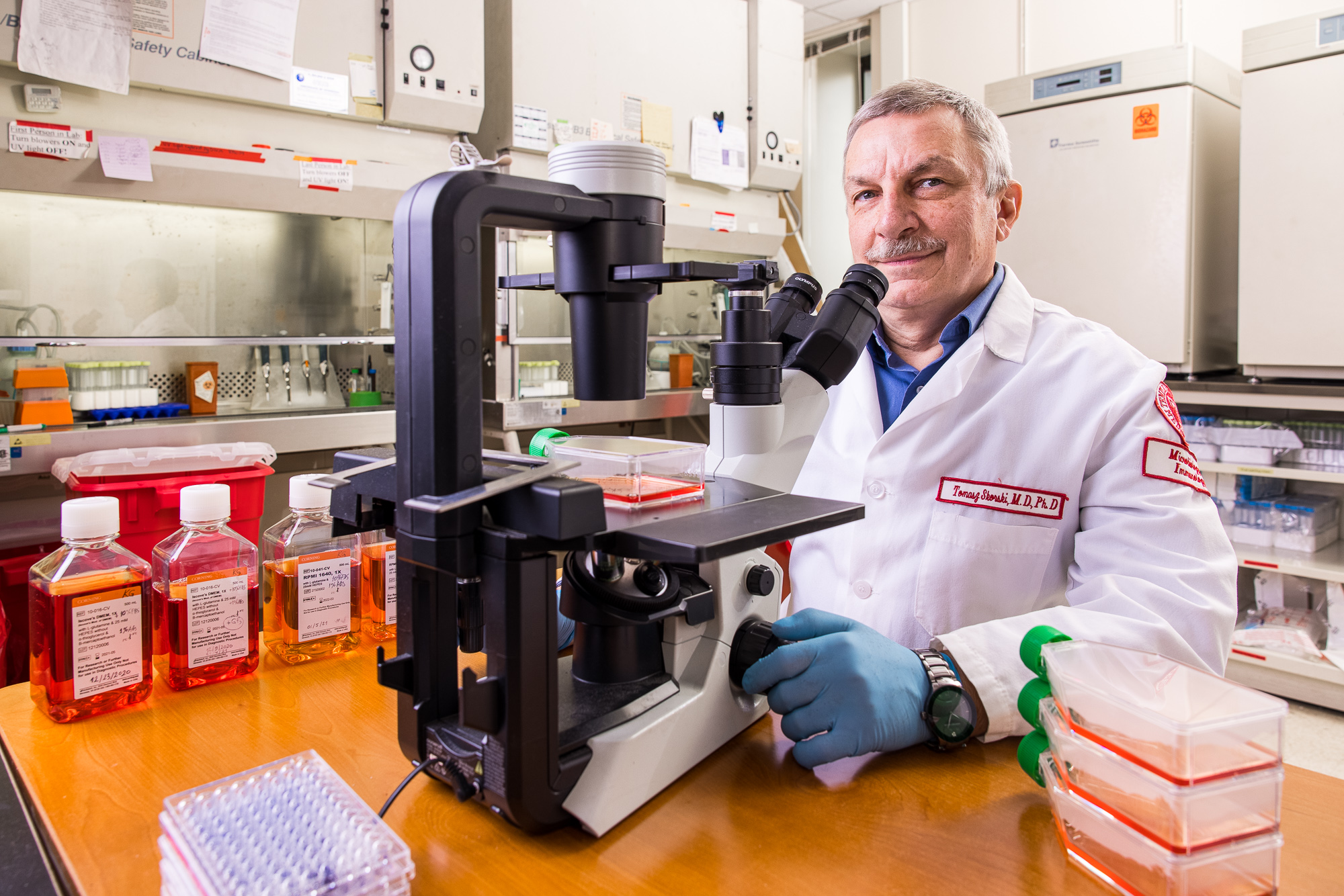
MPN cells accumulate extensive DNA damage that would normally kill them, but their cellular processes allow them to repair the damage. Dr. Skorski’s research showed that JAK2 inhibitors, commonly used to treat MPNs, do more than relieve symptoms. They also block key DNA repair systems, causing the cancer cells behave like cells lacking the tumor-suppressor genes BRCA1 or BRCA2, which are highly vulnerable to certain therapies.
“By understanding the vulnerabilities of MPN cells at the molecular level, we can strategically combine therapies to target the cancer while minimizing harm to healthy tissue,” said Dr. Skorski. “Our goal is not just to manage symptoms, but to fundamentally change disease outcomes for patients.”
Turning Cancer’s Weakness into a Treatment Strategy
This insight opened the door to a powerful combination strategy. By combining a JAK2 inhibitor with a PARP inhibitor already used to treat breast, ovarian and prostate cancers, researchers aim to overwhelm malignant cells with unrepaired DNA damage. The result is targeted cancer cell death while largely sparing healthy tissue.
Laboratory testing supported the theory and showed increased cell death of malignant cells carrying the JAK2 V617F mutation, forming the basis for the clinical trial.
By combining two drugs currently on the market – pacritinib and talazoparib – researchers were able to move quickly while prioritizing patient safety.
Early Results Show Meaningful Benefits for Patients
Although the study is still in its early stages, the first patients treated have responded positively:
- Significant symptom improvement: Patients with severe disease saw their symptom scores drop from very high levels to single digits within three months. Many reported less fatigue, fewer night sweats, reduced bone pain, improved appetite, and a better overall quality of life.
- Clear biological evidence: Blood tests showed that combining the two drugs increased cancer cell death, consistent with findings from earlier laboratory and animal studies.
- Treatment well tolerated: Patients remained on treatment for nearly a year without serious side effects requiring treatment to be stopped or the dose reduced.
From Discovery to Patient Care
Fox Chase is the first Cancer Center to explore this drug combination and the only site in Philadelphia conducting a study focused on myelofibrosis.
“Before coming to Fox Chase, I didn’t really have a life. I couldn’t go out, attend my daughter’s basketball and soccer games, or enjoy time with friends. Now, my life has changed completely. I can participate in family events and focus on things that matter to me. I feel safe knowing my care is individualized and constantly monitored,” said Mears.
Read more about Demetria Mear’s cancer journey
Beyond improving symptoms, the trial is designed to deepen scientific understanding of how MPNs respond to treatment. Using advanced single-cell DNA sequencing, researchers will track which cancer cell populations are eliminated and which persist, helping anticipate resistance and guiding future combination strategies.
“We believe this approach is special and clearly addresses an unmet need,” Dr. Abdelmessieh said.
The next step is to enroll a total of 24 patients over the next few years.
Learn more about this clinical trial and enrollment requirements.