His experience as a teacher in North Philly has shaped how Dr. Austin Williams interacts with patients and mentors med students.
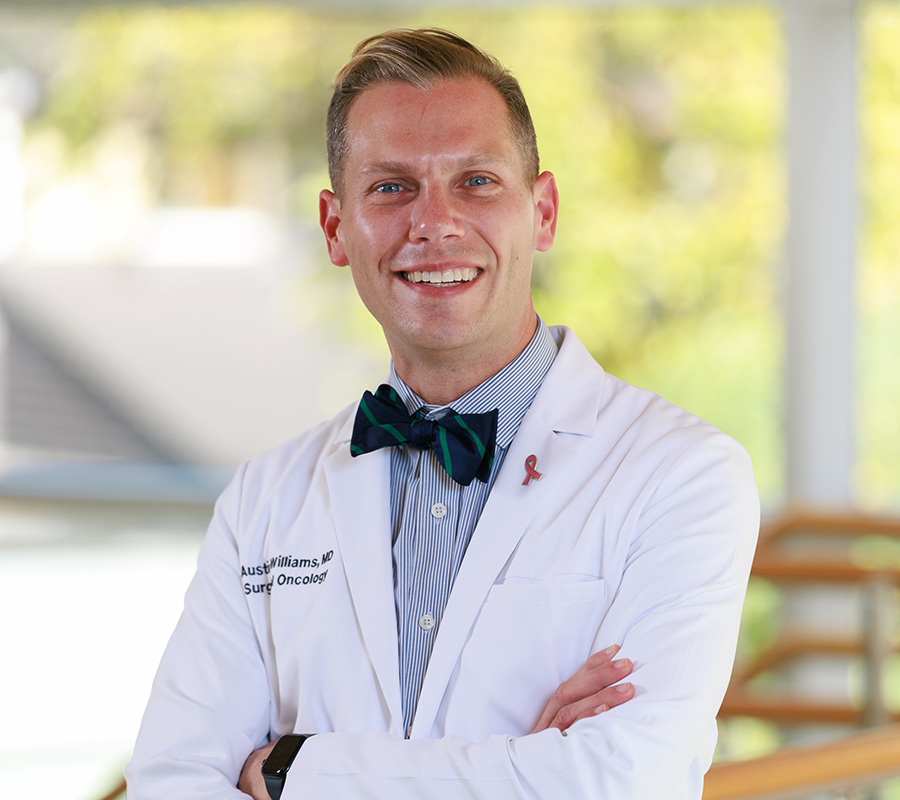
Before he was a surgeon specializing in breast cancer at Fox Chase Cancer Center, Austin Williams, MD, MSEd, FACS, was teaching chemistry at William Penn High School in North Philly. He was clearly adept in the sciences, but as a member of Teach for America, a nonprofit that serves low-income communities, he quickly learned some important lessons about how numerous barriers affected his students and many of the people who are now his patients.
“It was there that I first saw how access to resources shapes opportunity,” Williams recalls. “That experience continues to inspire my work today, not just in delivering excellent cancer care, but in ensuring that all patients have access to clinical trials and innovative treatments.”
The classroom became his training ground in teaching, mentoring, and translating complex ideas into understandable steps — skills he now applies daily in patient care and guiding medical students through cutting-edge research.
“The skills I developed in the classroom, like assessing baseline knowledge, tailoring explanations, and building confidence, all translate directly into how I communicate with patients and guide medical students through research projects,” Williams says.
Mentoring Medical Students
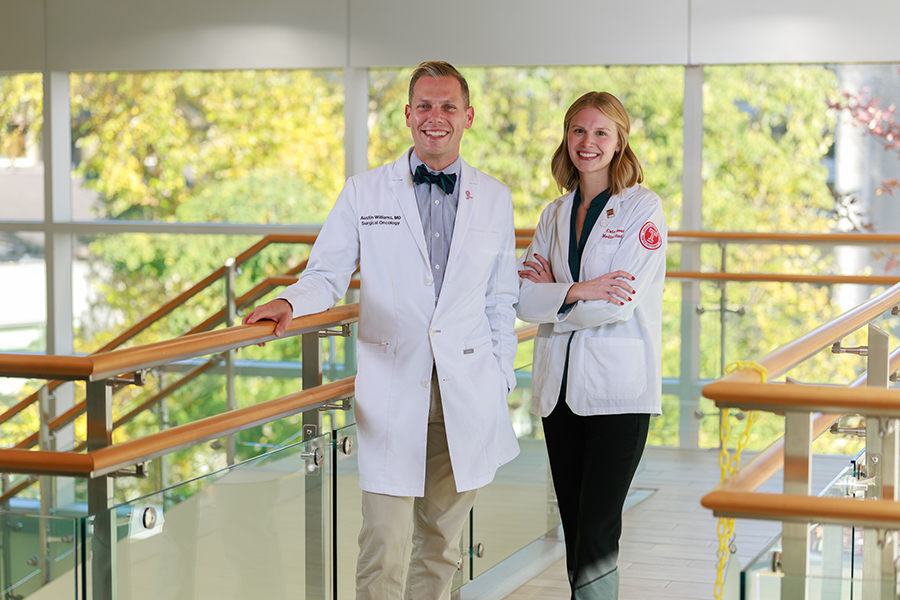
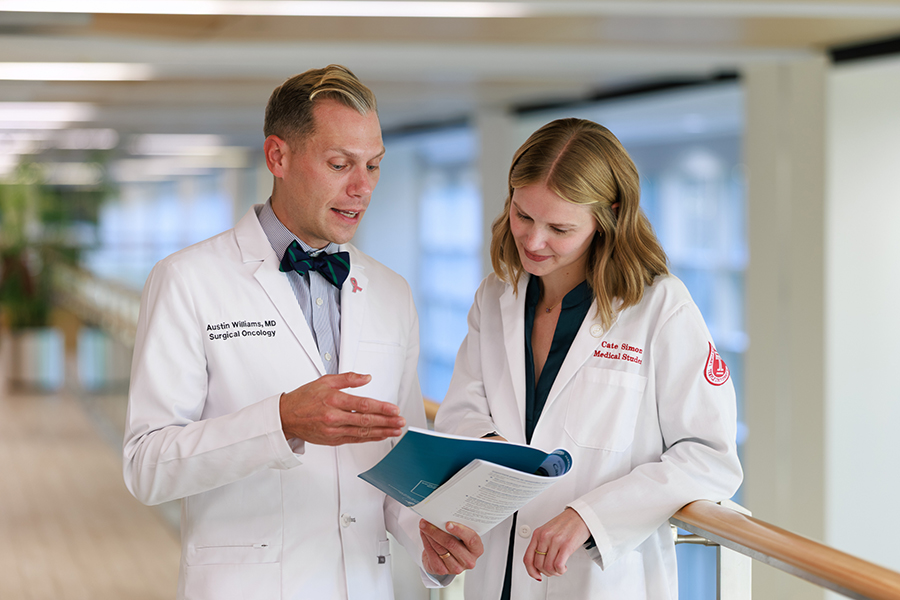
Williams, the Associate Program Director of the Breast Oncology Fellowship at Fox Chase, mentors general surgery residents from the Department of Surgery at the Lewis Katz School of Medicine who aspire to become breast cancer surgeons, as well as breast surgical oncology fellows at Fox Chase. He also plays a key role in mentoring students participating in Katz’s summer research elective for rising second-year medical students. Through this program, students gain hands-on experience in clinical research and receive guidance at every stage — from project design and data collection to statistical analysis and presenting their findings at national conferences.
Dr. Williams took the time to ensure I understood every step of the research and helped me build confidence in myself as a researcher.”
—Catherine Simon, a second-year medical student at Lewis Katz School of Medicine
“He met me where I was as a student who hadn’t had much prior research experience. He explained complex concepts in a way that was clear and approachable, and encouraged me to take ownership of the project.”
Applying Teaching Skills to Patient Care
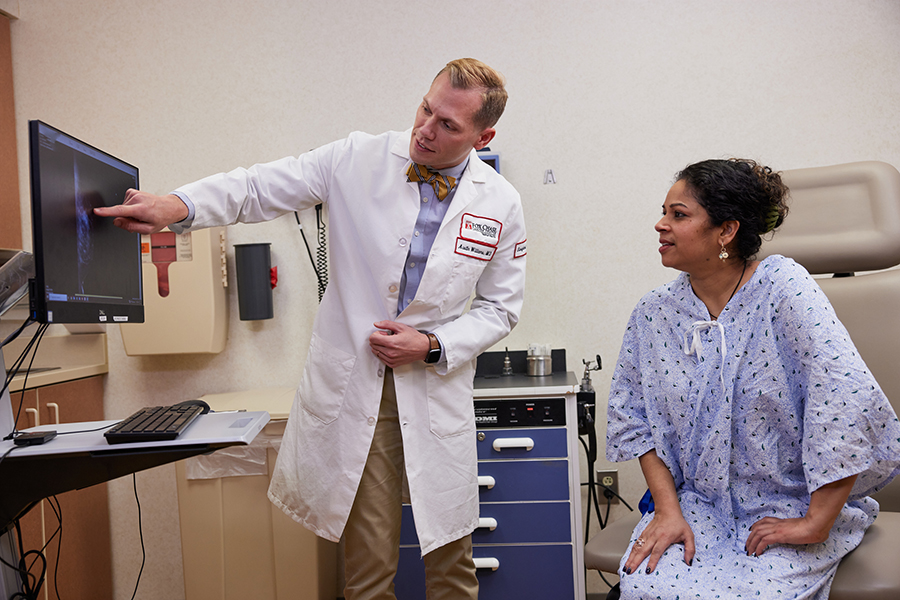
Williams applies the same teaching approach to patients, particularly during consultations with newly diagnosed breast cancer patients. He breaks down complex medical information, compares treatment options, and helps them make informed decisions.
“It’s essentially an education session. I need to communicate what cancer is, how this specific cancer behaves, and what options are available. That way patients feel confident in their decisions,” Williams says.
He is also focused on ensuring representative participation in clinical trials by prioritizing historically underrepresented groups, including Black and Hispanic patients, rural communities, and those from lower-income backgrounds.
Winn Award Fuels Equity in Cancer Research
Recently, Williams received a two-year, $240,000 award that will allow him to pursue this passion. The Robert A. Winn Diversity in Clinical Trials Career Development Award was designed to support early-career faculty in creating clinical trials that enroll diverse, representative populations.
The award is part of a broader initiative, the Robert A. Winn Excellence in Clinical Trials Award Program, which seeks to increase diversity in clinical trials and transform the clinical research landscape.
It provides the framework and guidance that will allow Williams to take those teaching principles from the classroom into research. It guides investigators in developing trials, mentoring young researchers, and communicating complex medical information in ways patients can understand and act on.
“Receiving the Winn Award is deeply meaningful to me because it reflects both my commitment to advancing cancer care and my dedication to ensuring equitable access,” Williams says.
Dr. Williams exemplifies the kind of physician-scientist we need — innovative, compassionate, and committed to breaking down barriers in both research and patient care.”
—Martin Edelman, MD, FACP, FASCO, Chair of the Department Hematology/Oncology at Fox Chase, Williams’ mentor for the Winn Award.
A Groundbreaking Clinical Trial
Unlike most awardees who join as co-investigators, Williams was already serving as the site principal investigator for a groundbreaking clinical trial at Fox Chase before receiving the award. The TAXIS trial is an international, randomized study for patients with breast cancer and lymph nodes that have tested positive for cancer. Traditionally, these patients undergo full lymph node removal from the armpit, a procedure linked to long-term complications like lymphedema — swelling caused by improper drainage of lymph fluid — as well as nerve damage and limited shoulder mobility.
TAXIS, which is the first clinical trial in which Williams has served as primary investigator, is exploring whether removing only lymph nodes that test positive, known as tailored axillary surgery, followed by radiation, can provide the same treatment outcomes with fewer side effects. Fox Chase is one of just four centers in the United States participating in the trial.
“Opening my first clinical trial showed me how much there is to learn about making research efficient, inclusive, and impactful,” said Williams.
My mission, whether in the classroom, clinic, or lab, is to empower students and patients so medical advances truly benefit everyone.”
— Austin Williams, MD, MSEd, FACS, Surgical Oncologist, Fox Chase Cancer Center