- Research leverages Fox Chase discoveries in necroptosis biology.
- Award supports a first-in-human clinical trial aimed at overcoming immunotherapy resistance.
- Project bridges laboratory science and early-phase clinical trials to address immune-cold tumors.
PHILADELPHIA (June 4, 2026)— A Fox Chase Cancer Center researcher has received a prestigious national award to advance a novel immunotherapy strategy aimed at one of oncology's most persistent challenges: tumors that resist immune-based treatments.
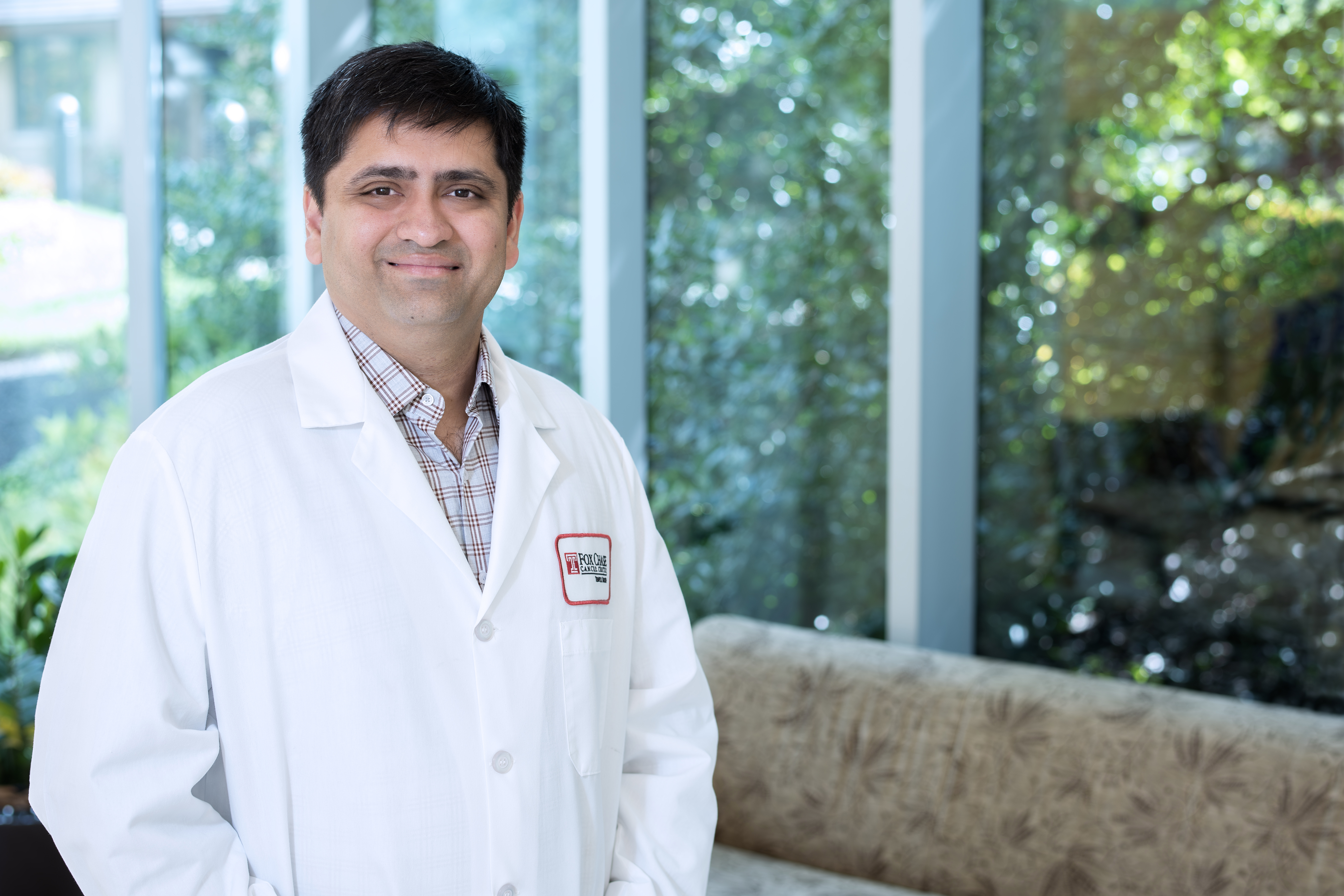
Parth Desai, MBBS, MD, Assistant Professor in the Department of Hematology/Oncology and Director of Clinical and Translational Research for the Thoracic and Head and Neck Service Lines, has received the ASCO Conquer Cancer Career Development Award. The highly competitive grant supports physician-scientists as they translate promising laboratory discoveries into early-phase clinical trials.
Desai's work focuses on converting "immune-cold" tumors—those that fail to attract or activate immune cells—into tumors that can respond to immunotherapy.
Turning Cold Tumors Hot
Desai's research focuses on necroptosis, a regulated form of inflammatory cell death that may help awaken immune responses against cancer.
“Necroptosis is unique because it doesn’t just kill cancer cells, it also creates inflammation that can alert and activate the immune system,” Desai said. “That makes it especially appealing for tumors that are immunologically ‘cold.’”
Many cancers evade immune attack by suppressing inflammatory signals. Necroptosis may help reverse that immune silence and improve how tumors respond to immunotherapy.
From Laboratory Discovery to Clinical Trial
The project builds on foundational work from Siddharth Balachandran, PhD, Director of the Center for Immunology at Fox Chase and Desai’s primary research mentor, whose laboratory has helped advance understanding of necroptosis biology.
The proposed clinical strategy includes a combination of:
- Curaxin (CBL0137): Increases Z-DNA levels to prime cancer cells for necroptosis.
Injected viral therapy: Delivers interferon gamma directly into tumors to trigger necroptosis.
Localized treatment: Activates necroptosis in a single tumor site to evaluate safety and immune response.
Immune monitoring: Uses biopsies and blood samples to assess biological and immune effects.
Together, the treatments are designed to initiate inflammatory cell death within the tumor while limiting systemic toxicity.
Balancing Safety and Immune Activation
Because necroptosis can generate strong inflammatory signals, safety will be a central focus of the phase I trial.
“To start, we’re deliberately triggering necroptosis in only one tumor site,” Desai explained. “That allows us to carefully study safety while evaluating whether local immune activation can generate anti-tumor effects elsewhere in the body.”
Patients enrolled in the study will undergo pre- and post-treatment biopsies and blood sampling so researchers can better understand the treatment’s biological and immune effects.
Collaborative Mentorship
In addition to mentorship from Balachandran, the clinical trial will be co-mentored by Anthony Olszanski, MD, RPh, Vice Chair of Clinical Research for the Department of Hematology/Oncology at Fox Chase and an expert in intratumoral immunotherapy delivery.
“This award gives me the opportunity to develop two critical skill sets,” Desai said. “One is learning how to develop therapies that target necroptosis, and the other is mastering the design and conduct of early-phase intratumoral clinical trials.”
Looking Ahead
“This recognition reflects the strength of Fox Chase’s homegrown science,” Desai said. “Necroptosis biology has been developed here, and this award helps move it closer to benefiting patients.”
Regulatory and industry agreements are underway, with plans to open the phase I study by late this year or early next year. If the approach proves safe and biologically active, future studies could expand to additional tumor types and treatment combinations.
“Our ultimate goal," Desai said, "is to develop new treatment options for patients whose tumors do not respond to today's immunotherapies.”