Unlike conventional radiation therapy systems, adaptive radiotherapy creates a new plan for each treatment session, allowing clinicians to deliver larger doses of radiation to tumors more safely.
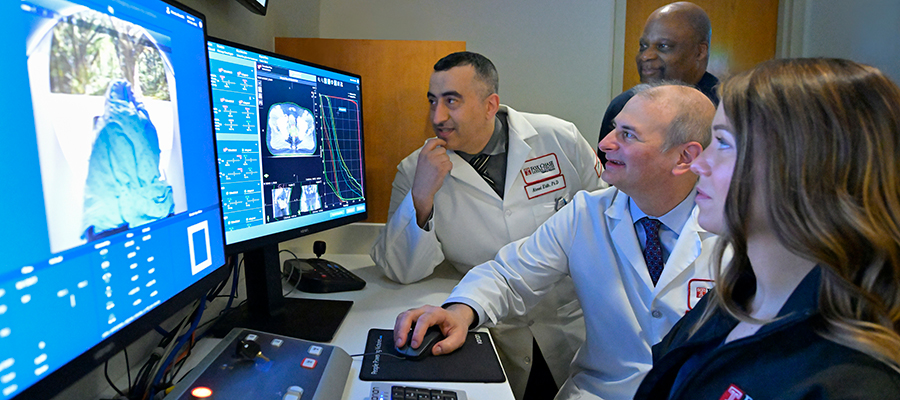
For patients with recurrent retroperitoneal sarcomas that cannot be treated surgically, treatment choices are limited. These tumors can grow quite large in the abdomen adjacent to vital organs or enmeshed within the bowel. Given their radioresistant nature they require high doses of radiation that risk damaging healthy nearby tissue. Once patients have undergone an initial radiation course, doctors are often left with no safe radiation treatment option.
But a pilot study from Fox Chase Cancer Center, presented recently at the 2025 American Society for Radiation Oncology Annual Meeting, offers patients and physicians new options. Researchers found that using CT adaptive stereotactic body radiation therapy can make repeat radiation not only possible, but safe. The study also underscores the promise this new therapy offers for many different types of cancer.
The key benefit of adaptive radiotherapy is that it makes treatment customization easier for physicians. Traditional radiation therapy relies on a single plan designed before treatment begins, a plan that rarely changes, even as a patient’s anatomy shifts during weeks of care. Adaptive therapy, however, creates a new plan for every radiation session.
Same-Day Imaging Yields More Precise Treatment
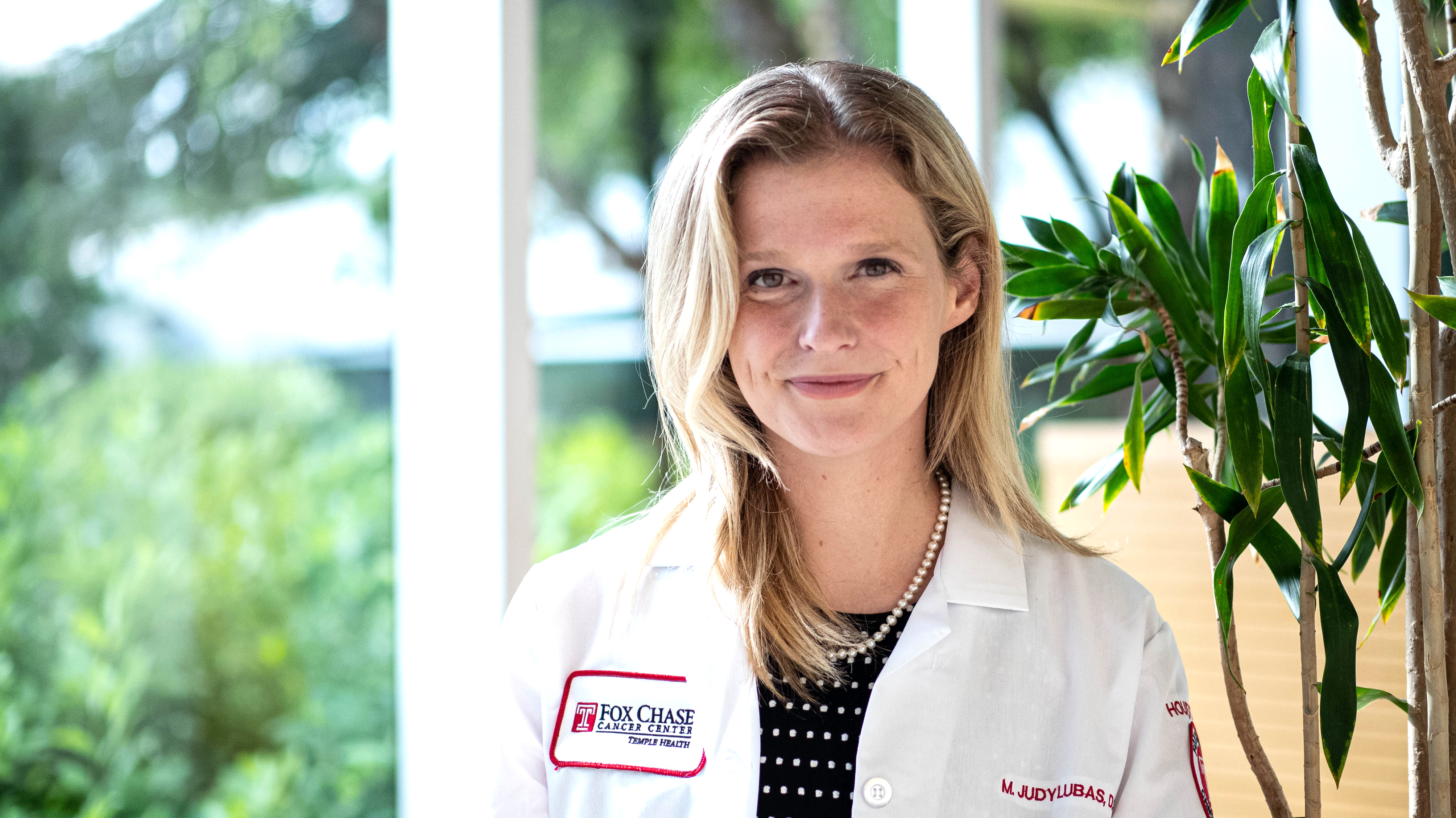
The study was conducted by Maryanne J. Lubas, DO, a fifth-year radiation oncology resident at Fox Chase, under the leadership of Rebecca Shulman, MD, Assistant Professor in the Department of Radiation Oncology. Their team reviewed the cases of five patients treated with adaptive re-irradiation between April 2024 and January 2025.
At each treatment, the team prepared two plans: a standard one created in advance and a second adaptive plan built from same-day imaging. Every session, the adaptive plan proved to be the better choice.
“These patients often face a difficult situation,” Lubas explains. “With adaptive therapy, we’ve shown it’s possible to move beyond short-term palliative intent and aim for long-term control of disease.”
Study Highlights at a Glance
- Greater precision: Radiation to the small intestine was reduced by 21% while tumor doses rose by 7.7%.
- Safety first: Patients experienced no serious complications and no emergency surgeries.
- Quality of life preserved: Patients maintained normal bowel and bladder function.
- Truly personalized care: Each treatment session was re-optimized in real time.
An Advance in Cancer Care
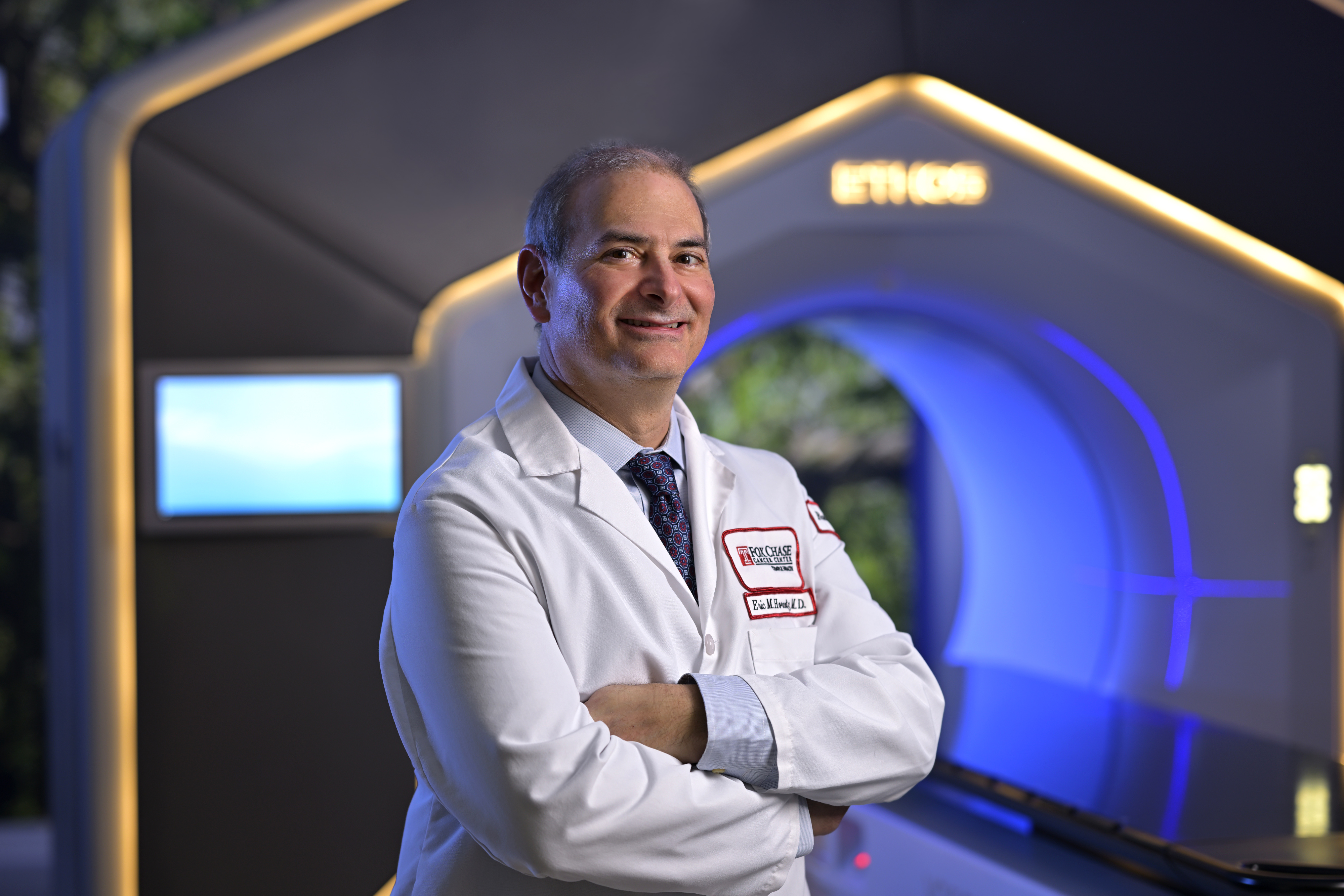
At the center of this progress is the Ethos cone-beam CT adaptive system, which uses imaging and AI software to re-optimize each plan while the patient is already on the treatment couch. Together, these innovations make it possible to closely track tumors during treatment.
“Adaptive radiation therapy takes us one step further,” says Eric M. Horwitz, MD, FABS, FASTRO, Chair of the Department of Radiation Oncology at Fox Chase and the Lewis Katz School of Medicine at Temple University. “We can now adjust not just the position of the patient, but the actual treatment plan itself in real time, giving a large dose of radiation to the cancer while protecting healthy cells.”
Fox Chase: A Leader in Adaptive Radiation Therapy
Fox Chase has been steadily bringing adaptive radiation therapy into mainstream cancer care and runs one of the largest clinical trial programs in the country focused on adaptive. The team was the first in the U.S. to launch a prostate cancer trial using this technology. Over the past year, the team has used the adaptive therapy approach in cancers of the prostate, bladder, liver, pancreas, breast, lung, and head and neck.
The Fox Chase team took years to develop the resources, clinical knowledge, and infrastructure to bring adaptive radiation therapy to patients.
“It was a huge learning curve, but we dedicated ourselves to it. Every Fox Chase radiation oncologist is cross trained to offer adaptive radiation as an option to every eligible cancer patient,” said Horwitz. “Equally skilled is our partner team of PhD physicists who work directly with us at the linear accelerator as part of standard treatment.”
A New Way of Thinking About Cancer Care
For patients with sarcomas and many other hard-to-treat cancers, adaptive radiotherapy is changing the conversation. This therapy presents a new way of thinking about cancer care, where treatment adapts to the patient instead of the other way around.
The Fox Chase team will continue following patients from the sarcoma study and expanding adaptive therapy into new clinical trials. For now, their early results point to a future where patients once considered untreatable may now have a chance for effective therapy.
Every Fox Chase radiation oncologist is cross trained to offer adaptive radiation as an option to every eligible cancer patient.” — Eric M. Horwitz, MD, FABS, FASTRO, Chair, Department of Radiation Oncology
What Patients Need to Know About Adaptive Radiation Therapy
Adaptive Radiation Therapy is a revolutionary, Food and Drug Administration-approved approach to treatment that allows for real-time adjustments of the radiation plan to account for the cancer’s changing responses to radiation therapy. Fox Chase Cancer Center has one of the most experienced adaptive radiation programs in the nation. Below are a few commonly asked questions.
Who can benefit from adaptive radiation therapy?
Patients with tumors that are close to important organs or tumors that move a lot during breathing or digestion often benefit most. This includes cancers of the lungs, breast, pancreas, and liver.
How is it different from traditional radiation therapy?
Traditional radiation therapy relies on a single treatment plan that doesn’t change, even if your body or tumor changes or shifts during care. Adaptive radiation therapy, on the other hand, updates your plan daily, ensuring that treatment is tailored to your body as it is that day. In addition, after initial treatment with traditional radiation therapy, patients often have few options if the cancer comes back. Adaptive radiation therapy makes re-treatment possible by safely targeting the tumor while lowering the risk of serious side effects.
What does treatment feel like for patients?
The process feels very similar to standard radiation therapy. The main difference is that your care team spends extra time before each session re-optimizing your plan. This happens while you’re already in position, and patients don’t feel anything during the planning process. It simply means the treatment you receive is more personalized and precise.
How does Fox Chase’s program compare to other hospitals?
Fox Chase has one of the largest adaptive radiation therapy treatment and clinical trial programs in the United States. The center was one of the first in the nation to launch a prostate cancer trial using adaptive technology, and there is now a second prostate trial that just opened. In addition, Fox Chase offers clinical trials for cervix and oligometastatic disease as well.
How can I find out if adaptive radiation therapy is right for me?
If you are being treated for cancer at Fox Chase, ask your physician about adaptive radiation therapy and whether it could be an option for your specific diagnosis. Patients may also be eligible for clinical trials that are currently enrolling.