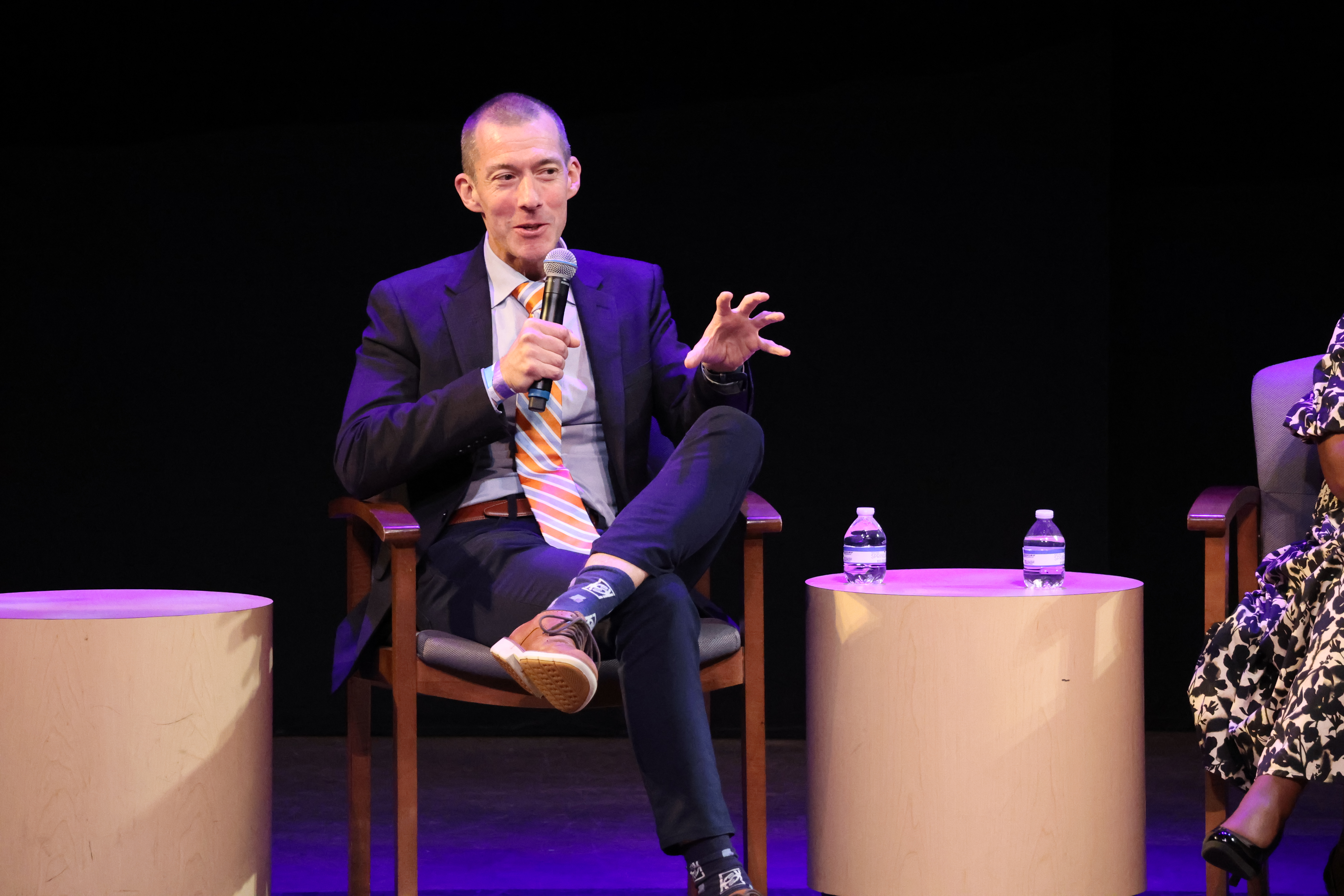
- Hall spoke at the Cancer Survivorship Summit on how genetic risk intersects with social and environmental barriers to cancer care.
- He highlighted solutions such as telehealth expansion, transportation support, and community-based screening to reduce disparities.
- Hall’s expertise in hereditary cancer positioned him to guide policymakers on improving equitable access to prevention and survivorship care.
PHILADELPHIA (December 17, 2025) — When Democratic U.S. Representative Debbie Wasserman Schultz hosted her second annual Cancer Survivorship Summit recently, the program brought together clinicians, researchers, policymakers, and patient advocates to address some of the most pressing issues facing cancer survivors today.
Among the speakers was Michael J. Hall, MD, MS, FASCO, Chair of the Department of Clinical Genetics at Fox Chase Cancer Center, who participated in a roundtable discussion on social determinants of health in cancer care.
“Representative Wasserman Schultz has made survivorship a priority, and the event brought together a wide range of experts ranging from genetics and behavioral science to mental health and childhood cancer risk,” said Hall, who is also Co-Leader of Fox Chase’s Cancer Prevention and Control Research Program.
Hall was invited through the National Comprehensive Cancer Network (NCCN), for which he serves as a Genetic Colorectal/Colorectal Cancer Screening Panel Member. The NCCN partnered with Wasserman Schultz’s office to help shape the summit’s educational program.
Connecting Genetics and the Environment
Hall took part in an informal panel with clinicians from Moffitt Cancer Center in Tampa, Florida, and City of Hope in Philadelphia. The discussion centered on how environmental and socioeconomic factors, from a patient’s ZIP code to food access and transportation, shape cancer risk, treatment access, and long-term outcomes.
“Genetic risk and social determinants of health may seem separate, but they interact in very real ways,” Hall said. “If someone has a hereditary risk for cancer, the additional screenings and preventive care they need become subject to the same barriers we see elsewhere.”
He noted that interventions as straightforward as ride-share support programs, expanded telehealth access, and community-based screening can help close gaps in care. “Telehealth was transformative during COVID,” Hall said. “For many patients, especially those who are sick or live far from major centers, it’s become essential. Yet its future depends on policy decisions made every few months. These summits help policymakers understand how much it matters.”
Leadership in Cancer Risk Assessment
In addition to his other roles at Fox Chase, Hall also leads its long-standing Risk Assessment Program, which since 1991 has enrolled more than 15,000 participants and built a unique registry of family histories, epidemiologic data, and thousands of biospecimens. This resource has powered major studies examining how biological, genetic, and environmental factors influence cancer risk and prevention.
Hall’s research centers on hereditary cancer syndromes such as Lynch syndrome and cancers related to BRCA, two tumor-suppressor genes that can lead to the development of cancer when mutated. His work consistently bridges genetics, patient behavior, and health system access.
That combination made him uniquely suited to contribute to the summit’s discussion on how hereditary cancer risk cannot be fully addressed without also confronting the broader barriers patients face in obtaining preventive care.
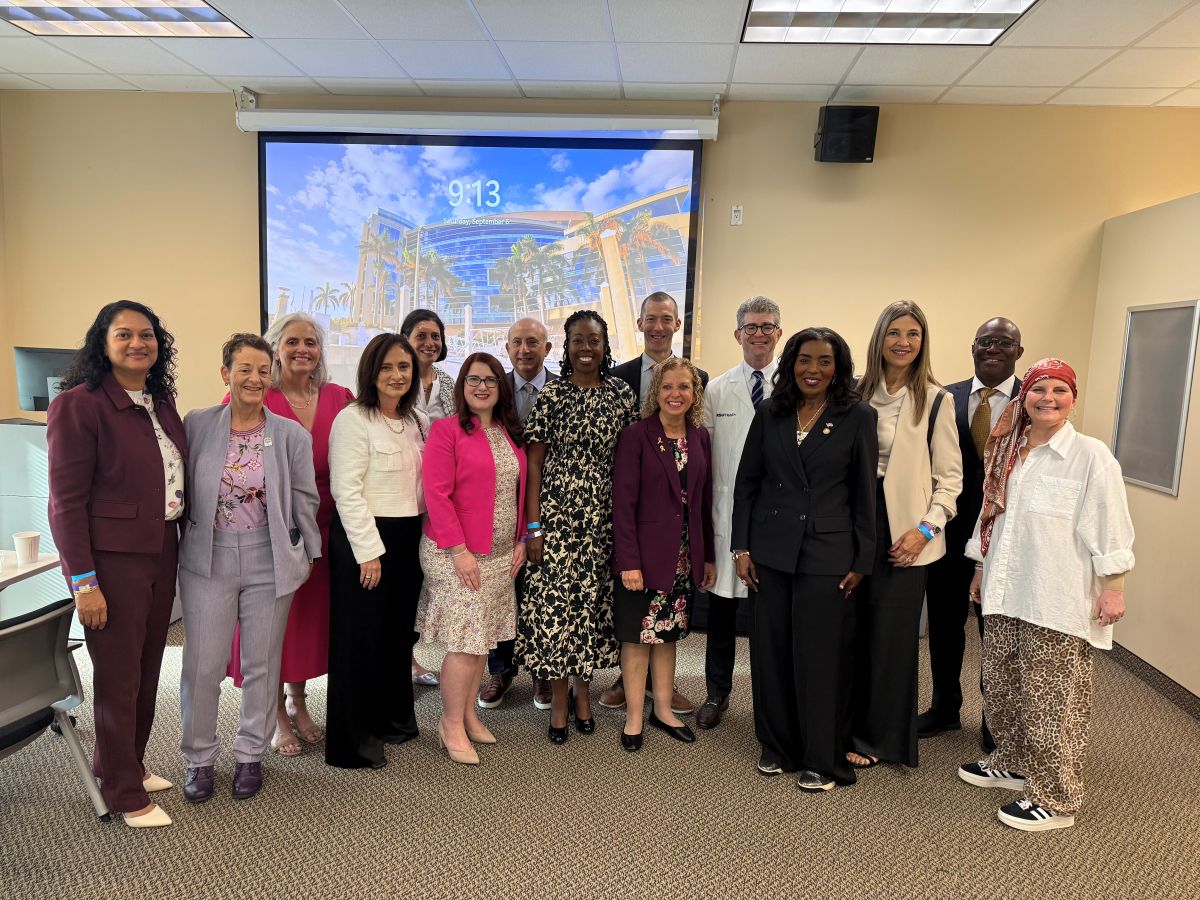
Held near Miami, the summit featured a mix of academic speakers, clinicians, survivor advocates, and local leaders. Wasserman Schultz, herself a breast cancer survivor and BRCA mutation carrier, opened the day by underscoring why equitable access to care remains central to her legislative agenda.
Driving Awareness and Policy Change
Hall emphasized that such forums can help ensure that elected officials hear directly from clinicians, researchers, and patients whose lives are shaped by these policies.
“There’s a cycle,” he said. “Patients understand what they need, and whether it’s transportation, nutrition support, or telehealth, they tell their representatives. Research backs up how critical these factors are. When policymakers hear this consistently, legislation begins to change.”
He pointed to innovative programs across the country, including efforts in Pennsylvania to establish “food pharmacies” that address nutrition insecurity as part of cancer prevention and survivorship care. “It’s a great example of recognizing a real barrier and doing something about it.”
A National Conversation
For Hall, participating in the summit offered an opportunity to not only share evidence-based insights, but also to support a growing national conversation around survivorship equity.
“Representative Wasserman Schultz has made this issue personal,” he said. “She understands deeply why equitable cancer care matters, and she’s willing to champion legislation that reflects that. It’s encouraging to see leaders focus on what truly affects patients’ lives.”