- The grant underscores Fox Chase’s leadership in advancing aging-focused cancer research.
- Fane’s research aims to make melanoma treatments more effective for older patients.
- The funding highlights the role of targeted philanthropy in enabling overlooked but critical research.
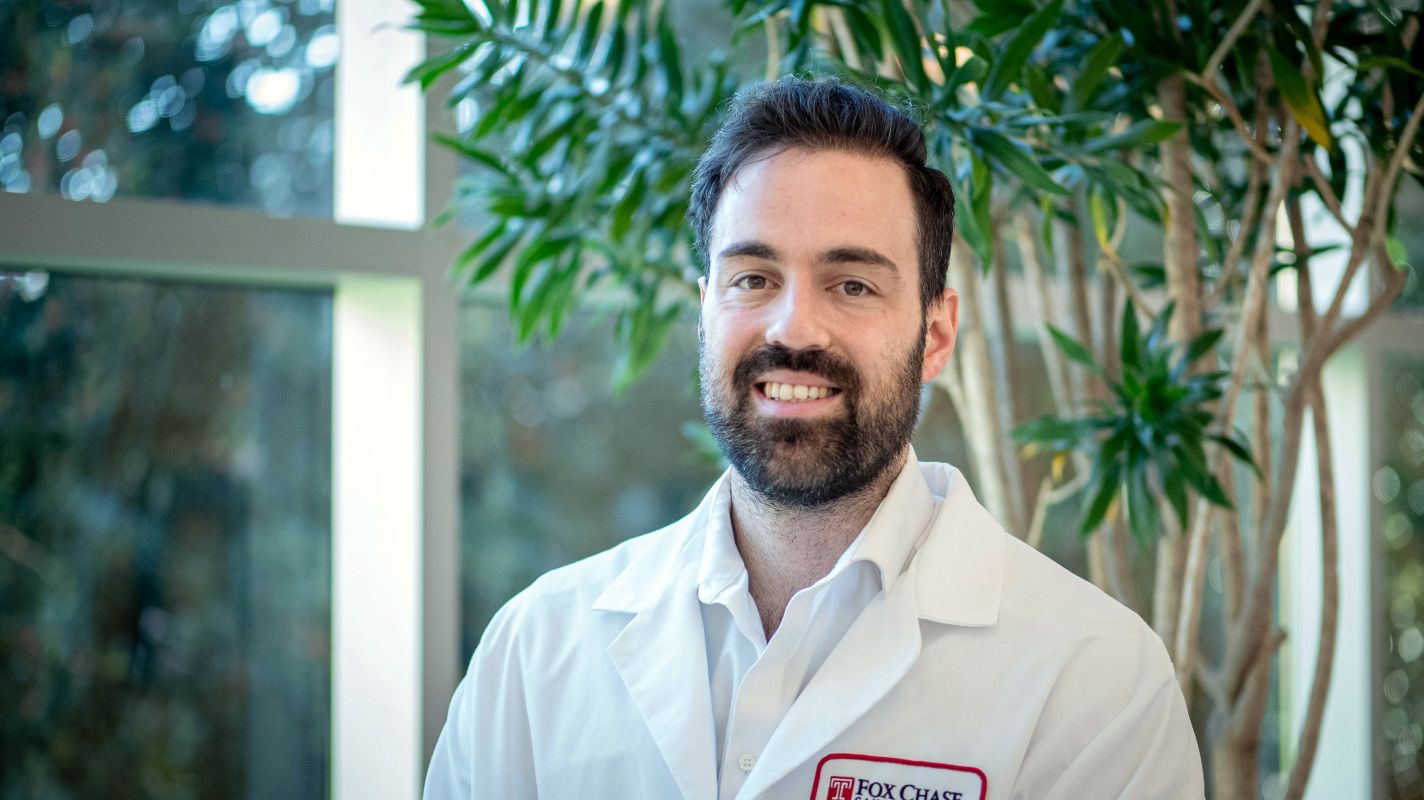
PHILADELPHIA (March 10, 2026) — Mitchell Fane, PhD, Assistant Professor in the Cancer Signaling and Microenvironment Research Program at Fox Chase Cancer Center, was recently awarded a three-year, $600,000 Early Career grant from the V Foundation, an organization dedicated to accelerating cancer research and treatment.
Focus on Aging and Aggressive Melanoma
The award will support Fane’s research into how age-related changes in the immune system influence the spread of melanoma in older patients.
“Cancer is largely a disease of aging, yet aging hasn’t been fully incorporated into research models,” Fane said. “This support allows us to take an important step toward closing that gap and developing approaches that are more relevant to the patients we treat.”
His work examines why melanoma becomes more aggressive with age, particularly its tendency to metastasize to the liver and lungs. It focuses on gamma delta T cells, a type of immune cell that declines significantly in both number and function over time.
“As these immune cells decrease, cancer cells are able to grow out much more aggressively,” Fane said. “We’re trying to identify pathways we can target to reduce metastasis in elderly patients, who make up the majority of melanoma cases.”
Rethinking Preclinical Cancer Models
A major challenge in cancer drug development, Fane noted, is that most preclinical studies rely on very young animal models, roughly equivalent to humans in their early twenties. This presents a significant research dilemma because the average melanoma patient is approximately 65 years old.
“We treat young mice with these drugs and see really promising results,” Fane said. “But when we move into clinical trials, those effects often disappear. One reason may be that we’re not modeling the disease in an appropriately aged system.”
To address this gap, Fane’s team studies metastatic melanoma across young, middle-aged, and very old mouse models, revealing a clear increase in disease aggressiveness with age.
Targeting Age-Related Immune Changes
In collaboration with Fox Chase’s Molecular Modeling Facility, Fane’s lab is developing inhibitors that target pathways shown to increase with age. The goal is to identify therapeutic strategies that could limit metastasis in older melanoma patients.
Conducting aging-focused research presents unique challenges, as aging animals require significantly more time and resources. Aged mice can cost up to ten times more than young animals because of the funds required to keep up with their long-term care, maintenance, and high mortality rates. This creates a barrier that often discourages such studies.
“This funding changes that and makes it possible to do this work with age-appropriate mice,” Fane said.
A Personal Motivation Behind the Research
The research also carries deep personal significance for Fane. His grandmother died from metastatic melanoma of the lung after declining immunotherapy treatment due to concerns about its effectiveness in older patients.
“That experience is a big reason I focus on melanoma and aging,” he said. “If we can develop therapies that work better for older patients, we can help people who are often underrepresented in research.”
Building Collaboration Through the V Foundation
Founded by legendary college basketball coach Jim Valvano, the V Foundation is known for its strong commitment to supporting early-career investigators through both funding and mentorship. Its Early Career program provides critical support to promising researchers who have not yet secured major federal funding while also fostering collaboration through national meetings and scientific exchange.
“This award is incredibly meaningful,” Fane said. “It allows us to pursue work that is critically important but often overlooked. The V Foundation doesn’t just provide funding; they build a community for researchers.”
Fane noted that the project reflects Fox Chase’s growing emphasis on aging-focused cancer research, an area increasingly recognized as critical to improving outcomes for older patients.