Weather Alert: Fox Chase remains open, though some appointments or services may be adjusted. Patients will be contacted directly if their visit is affected. Please check Foxchase.org for updates and monitor myTempleHealth for changes to scheduled appointments.
Fox Chase – Temple Urologic Institute Physicians Forge New International Partnership at Colombian Symposium
A team of urologists from the Fox Chase – Temple Urologic Institute traveled to Santiago de Cali, Colombia, in November for a two-day urologic symposium that leaders on both sides say marks the beginning of a long-term international collaboration.
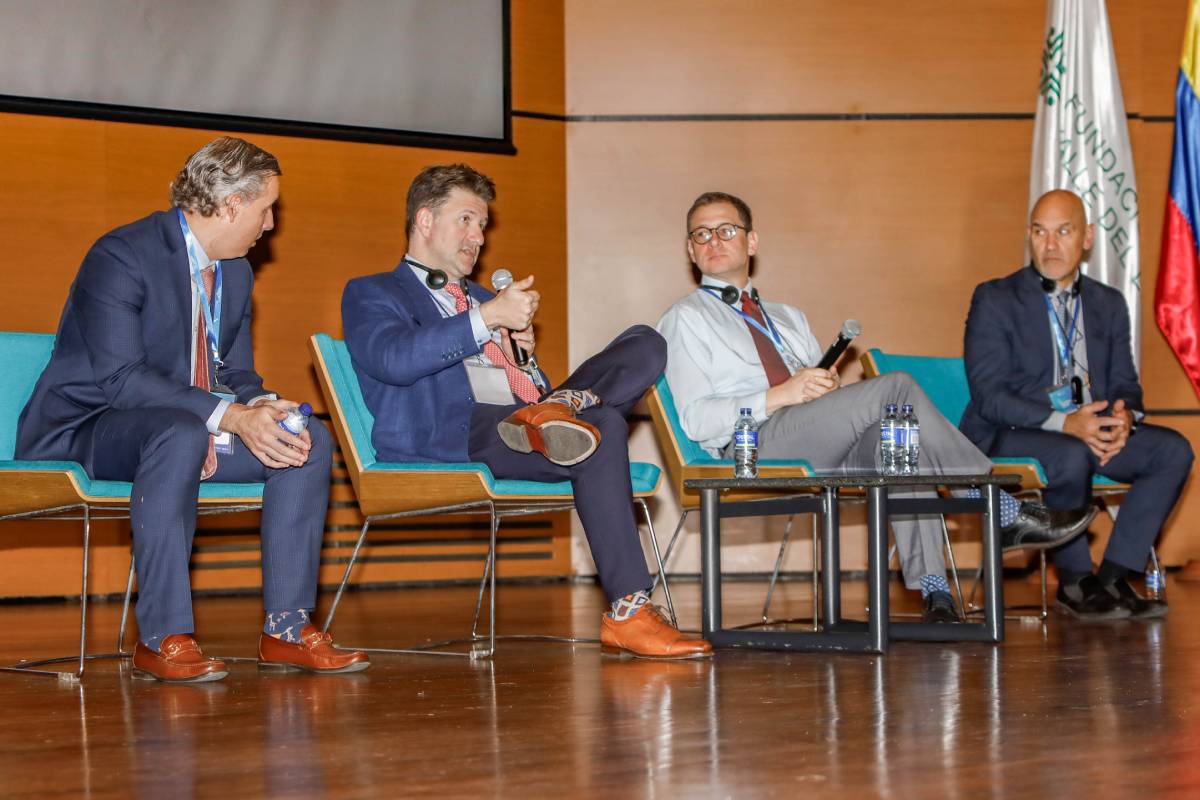
Hosted by Fundación Valle del Lili—one of Colombia’s leading medical centers—the symposium drew nearly 200 physicians, trainees, and health professionals from across Colombia and neighboring countries, including Venezuela and Ecuador. For the Cali hospital, it was a rare opportunity to bring a large group of international speakers to a city not typically chosen for major national medical meetings.
“It was an extremely dynamic and lively exchange of ideas,” said Alexander Kutikov, MD, FACS, Chair of Urology at Fox Chase and Co-Executive Director, Fox Chase – Temple Urologic Institute. “They are exceptionally capable physicians. This isn’t about us coming in with all the answers—our Colombian colleagues have extremely deep expertise. This is about partnership and learning from each other.”
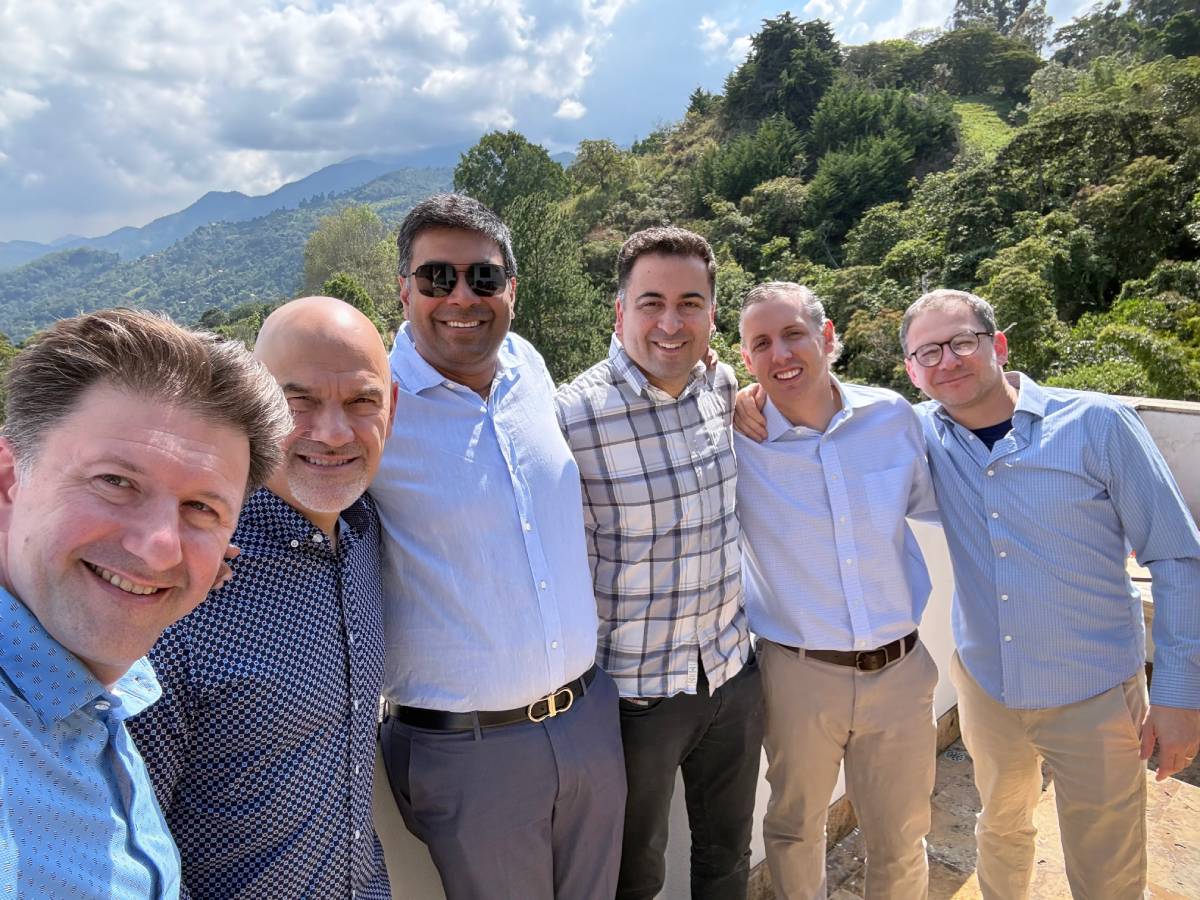
The delegation featured a strong showing from the Fox Chase – Temple Urologic Institute, including Robert Uzzo, MD, MBA, FACS, President and CEO of Fox Chase; Jay Simhan, MD, FACS, the other Co-Executive Director, Fox Chase – Temple Urologic Institute; Andres Correa, MD, Associate Professor and Director of Urology Research; Daniel M. Geynisman, MD, Chief of Fox Chase’s Division of Genitourinary Medical Oncology; and Justin Friedlander, MD, Professor of Urology at the Institute.
“This was a fantastic moment for Fox Chase, and it puts into focus what we already know about our impact beyond this small garden campus and reinforces our role as a global leader in cancer care,” said Uzzo. “Most importantly, this trip was about building enduring partnerships that will ultimately pay dividends for patients, physicians, and institutions both here and in Cali.”
For Andres Correa, a Fox Chase urologic oncologist who grew up in Cali, the symposium carried both professional and personal meaning. Correa helped initiate the collaboration earlier this year after leaders at Fundación Valle del Lili expressed interest in building a formal relationship with Fox Chase.
“As someone who was born and raised in Cali, this is a way for me to give back,” Correa said. “We provide world-class care at Fox Chase and sharing that knowledge—and learning from their expertise—is incredibly meaningful.”
A Two-Way Educational Exchange
Although Colombia’s healthcare system differs in structure and resources from that of the United States, physicians in Cali demonstrated surgical skill and adaptability in areas where technology is limited. For example, the hospital does not yet have robotic surgical systems, so surgeons perform complex procedures laparoscopically—techniques that are now rare in the U.S. due to the widespread adoption of robotics.
“They’ve preserved skills many American surgeons don’t regularly use anymore,” Kutikov said. “Their proficiency is extremely impressive.”
At the symposium, Fox Chase faculty delivered lectures on prostate, kidney, and bladder cancer; benign prostatic hyperplasia; urolithiasis; and advanced surgical reconstruction.
“One of my favorite sessions was the kidney cancer case discussion led by a local urologic oncology fellow,” noted Correa. “The discussion was dynamic; management strategies were excellent and align with the care we provide at Fox Chase Cancer Center. It was very rewarding to witness the excellent care that is being provided in the city.”
A key difference, he noted, is the incidence of bladder cancer in the country compared to the U.S., which in speaking with the local urologist seemed to be much lower than what is seen in Philadelphia.
“Perhaps this is due to differences in smoking rates, environmental exposures, or differences in incidence rates given the median age of a bladder cancer diagnosis is 70. As a public health metric, cancer is a disease of developed countries,” Correa said. “Colombia is a country undergoing rapid development and change—they founded their first cancer research institute, Fundación CTIC, only about four years ago in 2021.”
There are also great differences in how medical practice is regulated. “Over there, they cannot give medications that are not approved by their national equivalent of the FDA—that is, the government does not allow off-label use,” Correa said. “For example, in bladder cancer management, we use gemcitabine and docetaxel, but they could not use these medications in practice because they’re not specifically approved. They’re limited not for lack of medication but because of how the health system works.”
“The trip was overall a really great experience. I was able to share insights on new technology for kidney stone treatment—some of the technologies were very familiar to them, while others they don’t have yet,” Friedlander said. “Another talk I gave was on tips and tricks for prostate enucleation for benign prostate enlargement, which lead to great discussion with one of the doctors there who was early on in his experience with this procedure.”
According to Friedlander, he was also able to connect with an old colleague who works in Colombia in pediatric urology at the hospital where the symposium was taking place. He was a visiting researcher during Friedlander’s residency, where they had worked together on several projects. “It was very interesting to learn from the Colombians about how health care is delivered in their country and compare and contrast to the U.S.,” Friedlander said.
That sentiment was echoed by Geynisman, who presented on bladder, kidney, and prostate cancer. “How cancer is treated around the world can be quite different,” Geynisman said. “The exchange of ideas and best practices was important for both our new Colombian colleagues and us, as we can all learn from each other.”
The event also drew the attention of the Colombian Urologic Society, whose leadership was coincidentally in Cali that same week to evaluate potential host cities for an upcoming national congress. Following the visit, Cali was selected—a point of pride for local clinicians, who viewed the Fox Chase delegation’s presence as a demonstration of the city’s academic potential.
“Our presentations were well received, and we got great feedback.” Correa said. “Cali is not typically selected to host international symposia, so the fact that they held a conference including seven foreign doctors was a great source of pride for our hosting institution and the region as a whole.”
A Foundation for Future Collaboration
Across several days of presentations, meetings, and hospital tours, the two institutions explored ways to strengthen ties. Potential next steps include:
- Clinical training exchanges, with Colombian urologists visiting Fox Chase for observation and hands-on learning
- Joint tumor boards or case consultations for complex patients
- Exploration of research partnerships or future clinical trial participation
- Support for emerging surgical programs, such as laser enucleation of the prostate
“We’re really looking at three pillars: education, patient care, and expanding the Fox Chase brand internationally,” Kutikov said. “When patients abroad seek specialized care, we want to make sure Fox Chase is at the top of the list.”
Indeed, Correa sees room for a more substantial presence for Fox Chase. “From my understanding, some American cancer centers have made in-roads into Colombia, but it largely amounts to a branding exercise,” Correa said. “There is an opportunity to—yes, grow our brand internationally—but more importantly, to build meaningful connections.”
A Meaningful Trip—Personally and Professionally
For Correa, whose own family members have traveled from Cali to receive care at Fox Chase, the experience was a powerful reminder of the impact of global medical collaboration. He left Cali for college in Pittsburgh mostly because of some local Colombian connections to the University of Pittsburgh, he explains, and desires to build Philadelphia’s reputation locally to inspire future students.
Philadelphia has many things in common with Santiago de Cali. Both cities share a dramatic pride of place and revel in their underdog reputations. Both cities take fierce personal ownership of their local sports teams—Cali is home to two of the best soccer teams in the nation. While Philadelphia’s trendsetting days of “American Bandstand” (or even “Dancin’ on Air”) are behind it, Cali is a renowned hotbed for salsa dancing, although no official word was reported of any members of the delegation taking advantage of the local club scene.
“If this is the beginning of a long-term bridge between our institutions, I think we can do something truly meaningful for patients on both sides,” Correa noted.
Fox Chase leaders say they expect follow-up visits from Colombian physicians in 2026, with the goal of turning this first symposium into a sustainable exchange.
“We’re Philadelphia’s Cancer Center,” Kutikov said. “But if we do this right, maybe we can be Cali’s Cancer Center, too.”
Fox Chase Cancer Center (Fox Chase), which includes the Institute for Cancer Research and the American Oncologic Hospital and is a part of Temple Health, is one of the leading comprehensive cancer centers in the United States. Founded in 1904 in Philadelphia as one of the nation’s first cancer hospitals, Fox Chase was also among the first institutions to be designated a National Cancer Institute Comprehensive Cancer Center in 1974. Fox Chase is also one of just 10 members of the Alliance of Dedicated Cancer Centers. Fox Chase researchers have won the highest awards in their fields, including two Nobel Prizes. Fox Chase physicians are also routinely recognized in national rankings, and the Center’s nursing program has received the Magnet recognition for excellence six consecutive times. Today, Fox Chase conducts a broad array of nationally competitive basic, translational, and clinical research, with special programs in cancer prevention, detection, survivorship, and community outreach. It is the policy of Fox Chase Cancer Center that there shall be no exclusion from, or participation in, and no one denied the benefits of, the delivery of quality medical care on the basis of race, ethnicity, religion, sexual orientation, gender, gender identity/expression, disability, age, ancestry, color, national origin, physical ability, level of education, or source of payment.
For more information, call 888-369-2427