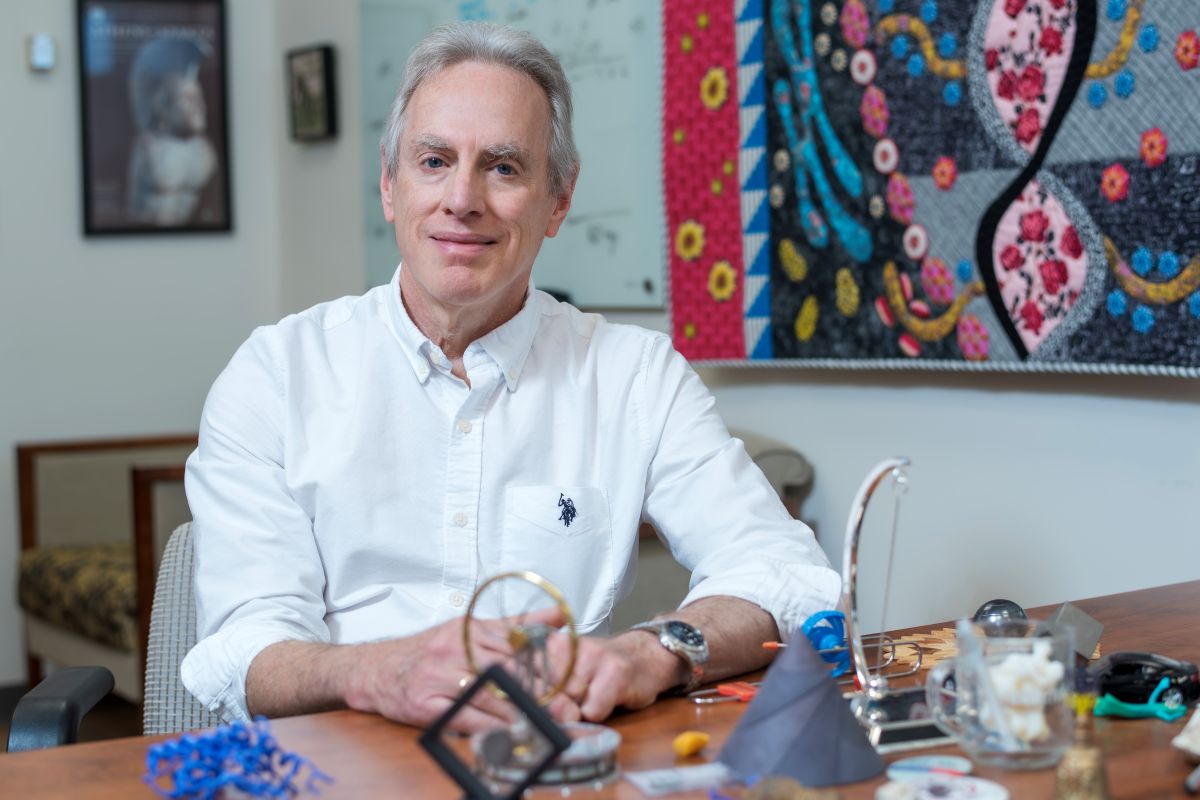
Jonathan Chernoff, MD, PhD, the Stanley P. Reimann Chair in Oncology Research at Fox Chase Cancer Center, has received a Drug Discovery Initiative Award from the Children’s Tumor Foundation to pursue a new strategy for targeting RAS biology in neurofibromatosis type 1, or NF1.
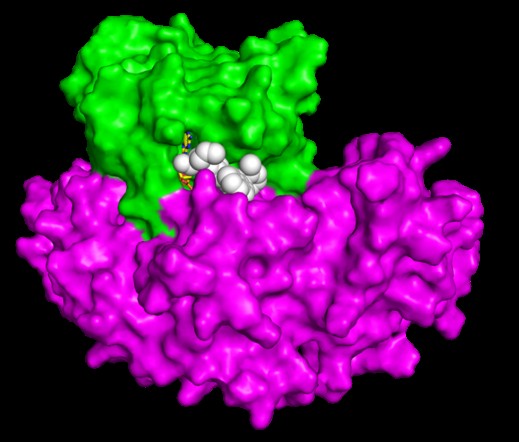
The award provides $100,000 per year for two years to support Chernoff’s work on what he calls a “Ras-GAP glue,” a small-molecule approach designed to bring together two proteins that help regulate cell signaling: RAS and p120RasGAP.
The project builds on growing momentum around RAS-targeted therapies. In August, the FDA approved daraxonrasib for certain patients with metastatic pancreatic cancer, showing that new ways of targeting RAS can lead to meaningful advances for patients. Chernoff’s work explores a related idea in a different setting: using a small molecule to change how RAS interacts with other proteins in the cell.
Restoring a Natural Brake on RAS
In NF1, the NF1 gene normally produces a tumor suppressor protein that acts as a brake on RAS, a signaling protein that helps control cell growth and survival. When NF1 is lost, that brake is removed and RAS can become overactive, even though RAS itself is not mutated.
Chernoff said cells have other brakes on RAS, including p120RasGAP, also known as RASA1. But in NF1-mutant cells, p120RasGAP does not appear to compensate strongly enough for the loss of NF1.
“If your car had two sets of brakes and one failed, you would hope the second set would take over,” Chernoff said. “But in NF1, that second brake is there and it just does not work well enough. Our idea is to use a molecular glue to bring that second brake to RAS and make it work better.”
Rather than blocking RAS directly, the approach is designed to help p120RasGAP bind more strongly to RAS. By holding the two proteins together, the researchers hope p120RasGAP can more effectively turn RAS off and reduce abnormal signaling in NF1-mutant cells.
Using AI to Find Candidate Molecules
To look for possible molecular glues, Chernoff’s team worked with computational scientists who used AI-based tools to search for small molecules that might help RAS and p120RasGAP stick together. The team started with 12 predicted candidates. In early laboratory studies, two worked as hoped, lowering active RAS and reducing signals that drive growth in NF1-mutant cells.
“For something like this, in the past you might have screened hundreds of thousands of compounds,” Chernoff said. “We started with 12, and two of them did what we predicted. That is an incredibly high hit rate.”
Why NF1 Matters
NF1 is a cancer predisposition syndrome that affects the peripheral nervous system. People with the condition commonly develop dermal and plexiform neurofibromas, benign tumors associated with peripheral nerves. Plexiform neurofibromas can grow large enough to compress nearby nerves, causing pain and other problems, and in some cases can transform into malignant peripheral nerve sheath tumors, aggressive cancers that are a major source of illness for people with NF1.
NF1 alterations can also occur later in life in tumors such as melanoma, ovarian cancer, and lung cancer, meaning the biology Chernoff is studying could have implications beyond inherited NF1.
Part of a Broader RAS Research Moment
For decades, RAS was considered nearly impossible to drug. Daraxonrasib is part of a new generation of therapies that has helped change that view. The drug works differently from Chernoff’s experimental compounds, but both reflect the same larger shift: researchers are finding new ways to interfere with RAS by shaping the protein interactions that control its activity.
Chernoff said daraxonrasib uses a molecular glue-like strategy to bring another protein to RAS and prevent RAS from signaling. His team’s approach aims to bring in a natural RAS regulator instead.
“RAS itself was considered undruggable for about 40 years,” Chernoff said. “That has changed dramatically over the past decade. But there are still many cancers where RAS is activated even though RAS itself is not mutated. NF1 is one of the clearest examples.”
What Comes Next
Chernoff emphasized that the compounds are early research tools, not drugs ready for clinical use. Next steps include solving structural details of how the molecules bind, improving potency, testing them more rigorously in cell models, and eventually evaluating whether the strategy can reduce tumor growth or prevent tumor development in animal models.
“These are not drugs yet,” Chernoff said. “They are starting points. The next step is medicinal chemistry—making the molecules more potent and giving them better properties.”