
Understanding Minimally Invasive Kidney Cancer Surgery
-
By Alexander Kutikov, MD, FACS
Surgery is an effective treatment option for many patients with kidney cancer, but not all surgeries are the same. At Fox Chase Cancer Center, our surgeons have helped develop minimally invasive and kidney-sparing techniques. Today, more than 90% of kidney surgeries at Fox Chase are performed using small incisions, laparoscopic instruments, and robotic assistance.
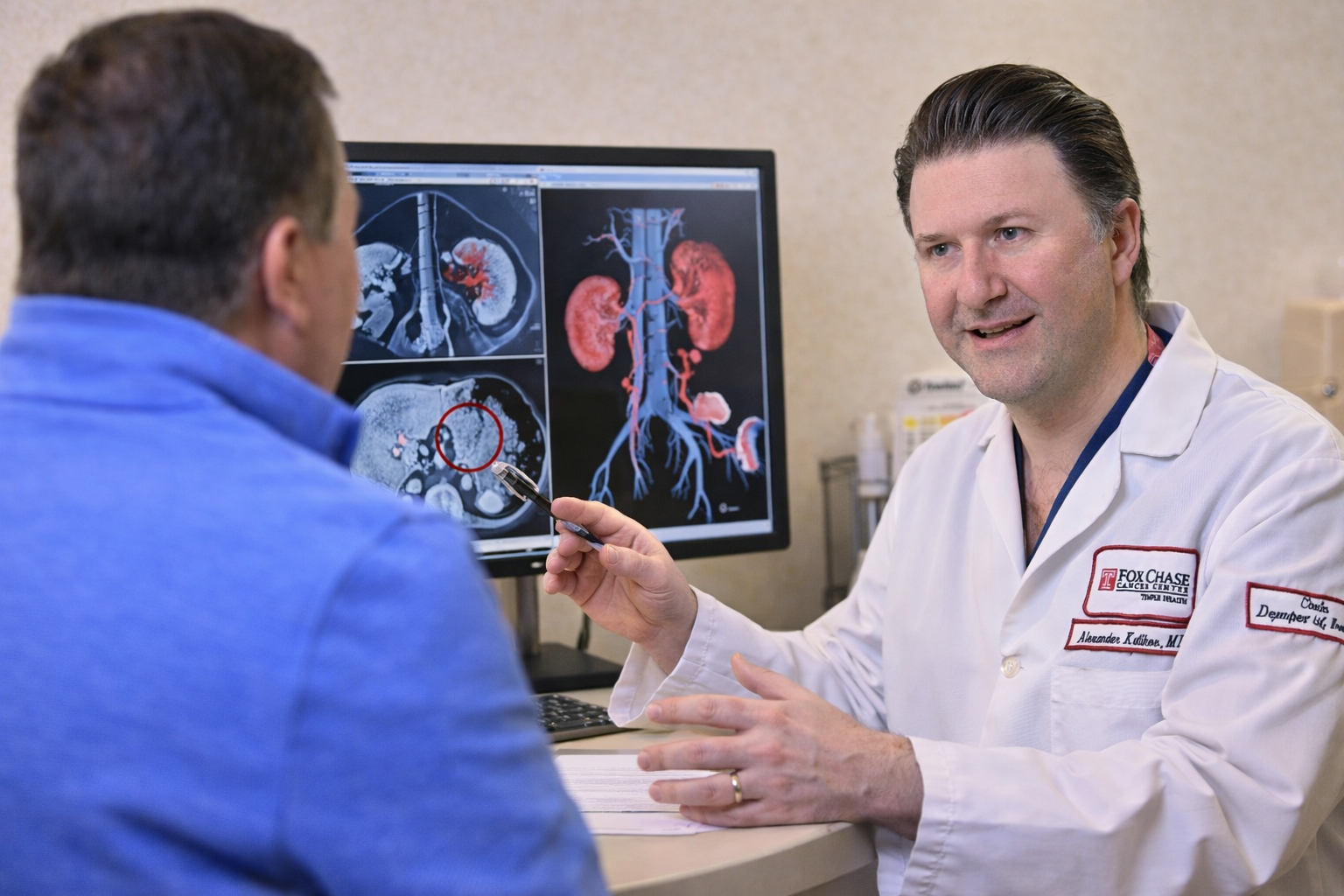
Patients I see in my urology practice often have questions about these procedures. Here are a few key points I share to help them better understand:
- How these techniques can ease recovery and help preserve kidney function in eligible patients
- Our team’s experience performing them—and why that matters
Why small incisions matter
To understand the advantages of minimally invasive kidney surgery, it helps to compare it with traditional open surgery.
With open surgery, surgeons create a large incision to reach a specific organ. The deeper the organ, the larger that incision must be for the surgeon to operate safely.
The kidneys sit deep in the body. Traditional incisions can require splitting muscle and sometimes removing part of a rib. That can mean more postoperative pain, and recovery can take months. A small percentage of patients develop chronic pain from these larger incisions. Larger incisions also come with a higher risk of hernias.
When minimally invasive surgery was developed, kidney surgeons were among the first to adopt it—improving treatment for their patients.
As I explain to my patients, we typically work through five to six small incisions (called ports). Doing kidney surgery this way offers several benefits, including:
- Recovery is often much quicker.
- Postoperative pain is usually lower.
- There is often less blood loss and less visible scarring.
- Many patients go home the next day.
Another benefit is less internal scarring, which can matter if patients need future surgery.
Robotic surgery has transformed kidney-sparing surgery
Fox Chase surgeons have also led the way in a kidney-sparing cancer surgery called partial nephrectomy. In a partial nephrectomy, we remove the tumor while preserving as much healthy kidney tissue as possible.
Removing only part of the kidney used to be challenging with traditional laparoscopy because it requires extremely precise cutting and suturing—especially when a tumor is in a hard-to-reach location or when angles are tight based on a patient’s anatomy.
Then came robotic surgery, which gives surgeons a much greater range of motion and more natural, wrist-like movements with laparoscopic instruments.
Robotic surgery made even very complex partial nephrectomies more achievable. In many ways, it has revolutionized kidney surgery—we can now perform highly complex procedures through small incisions while helping patients recover more quickly.
We’ve been delivering those benefits to patients from the beginning. One of the first large series—100 patients—treated with robotic partial nephrectomy came from Fox Chase.
Innovative approaches make minimally invasive surgery possible for more patients
We also use techniques such as retroperitoneoscopic robotic surgery. This specialized approach goes behind the abdominal cavity rather than through it. It can be especially helpful for patients who have had prior abdominal surgery, or what surgeons call a “hostile abdomen,” where scar tissue makes going through the abdomen with a laparoscope very difficult or impossible.
Instead, we approach the kidney from the back without entering the abdominal cavity. This allows many of my patients to have minimally invasive surgery when they were told open surgery was their only option.
We also use this technique for tumors in difficult locations, such as those tucked behind blood vessels. My colleagues and I have been successfully performing retroperitoneoscopic robotic procedures at our center since 2012.
Experience matters with kidney cancer surgery
Strong evidence shows that both surgeon experience and team experience matter. The more procedures a team performs, the more variations and potential complications they’ve seen—and the better they become at preventing and managing them.
When my patients ask about experience, I tell them that surgeons at our center perform among the highest volumes of minimally invasive kidney surgeries in the country. Our surgeons regularly share knowledge and learn from one another. We also have dedicated Magnet-recognized nursing teams specially trained to care for patients after surgery.
When it comes to kidney cancer surgery, we focus on three key priorities, in this order:
- Control the cancer
- Save the kidney
- Perform the surgery in the least invasive way possible
For the vast majority of our patients, we successfully achieve all three goals.
When minimally invasive surgery is the best option for my patients, it can significantly change their experience. They often get back to their daily lives and work faster, resume exercise sooner, and need less pain medication. In other words, it can make kidney surgery much easier on patients.
At the Fox Chase–Temple Health Urologic Institute, we have nationally recognized surgeons who train the next generation of physicians. We’re always happy to provide second opinions, and sometimes we can offer options that other centers cannot.
To make an appointment with a Fox Chase kidney surgeon, call 888-FOX-CHASE (888-369-2427) or request an appointment online.
Learn more about kidney cancer treatment at Fox Chase Cancer Center.
Helpful Resources
Looking for more information?