“I want to share my story and encourage men to get their PSA checked — and then follow up. Talk to your doctor, ask questions, and get treated.”‐Ralph Lewis
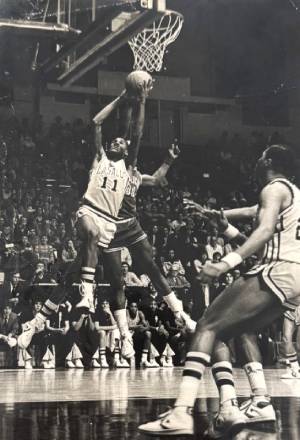
I was born and raised in Philadelphia, and I played high school basketball at Frankford. In 1981, I started playing basketball for La Salle University. While there, I was inducted into their Hall of Fame and got to play in March Madness. Additionally, I was Big Five Player of the Year and inducted into the Big Five Hall of Fame in Philadelphia. For most of my life, I’ve been involved in professional basketball as either a player or coach.
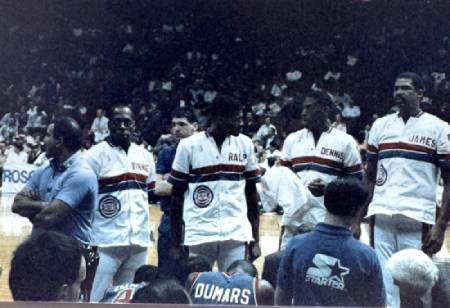
I started my career playing in the NBA for the Detroit Pistons and later the Charlotte Hornets. Given all that, I consider myself a pretty healthy and active person. I’m used to getting regular physicals as part of playing sports. That’s how I ended up being diagnosed with prostate cancer.
Elevated PSA
In 2024 I had a checkup, and my doctor told me that I was healthy, but my prostate-specific antigen level, also known as PSA, was 4, which is at the high end of normal. When she suggested meeting a urologist, I made an appointment right away, because my dad passed away from prostate cancer.
The sad thing about my dad was he didn’t get help. He didn’t trust doctors. So, by the time he saw someone, it was too late — the cancer had spread, and it was no longer treatable. I knew I didn’t want that to happen to me.
I met the urologist and they did a biopsy, which confirmed it: I had prostate cancer.
A Family Connection
I was living in Charlotte, North Carolina, at the time, and I wanted a second opinion. I came to Fox Chase Cancer Center because that’s where my dad was treated, and I also have a sister who works there.
I met with two doctors, Dr. Alexander Kutikov, a urologic oncologist and Chair of the Department of Urology, and Dr. Eric Horwitz, who is the chair of the Department of Radiation Oncology. I knew I wanted to get this cancer treated, but I wanted to know what my options were.
They explained that I had a choice of either radiation or surgery. Radiation is less invasive, but it leaves scar tissue that makes it impossible to do surgery later on if the cancer ends up coming back. Because I’m in my 60s and hopefully still have many years ahead of me, I decided to go the surgical route.
Dr. Kutikov, who is also Co-Executive Director of the Fox Chase-Temple Urologic Institute, performed a prostatectomy, a surgery to remove the prostate. He used robotic tools that allowed him to do the surgery with fewer incisions. My recovery went smoothly, and the best part was that he got all the cancer out.
Overall, I received excellent care at Fox Chase and it was a really good experience. I go in for regular follow-ups and I’ve been cancer-free since the surgery. Throughout this journey, having the support of my wife and family was really important to me.
Sharing My Experience
Since going through my cancer diagnosis and treatment, it’s been really important to me to tell people about my experience and encourage them to take care of their health, especially men.
My dad wasn’t the only person I know who had a bad outcome with cancer. I have several men in my family who passed away from cancer because they avoided medical care and just would not take care of things.
That’s why I want to share my story and encourage men to get their PSA checked — and then follow up. Talk to your doctor, ask questions, and get treated. When it comes to treatments, one size doesn’t fit all, and you may have different options depending on your age and health. Don’t wait until it’s too late to deal with it.
Now, I’m moving forward and just enjoying this time with my wife and family. After these last few years, it’s nice getting back to doing normal things, like working out in the yard and going on a few trips. I’m just happy to be here.
Learn more about treatment for prostate cancer at Fox Chase Cancer Center.