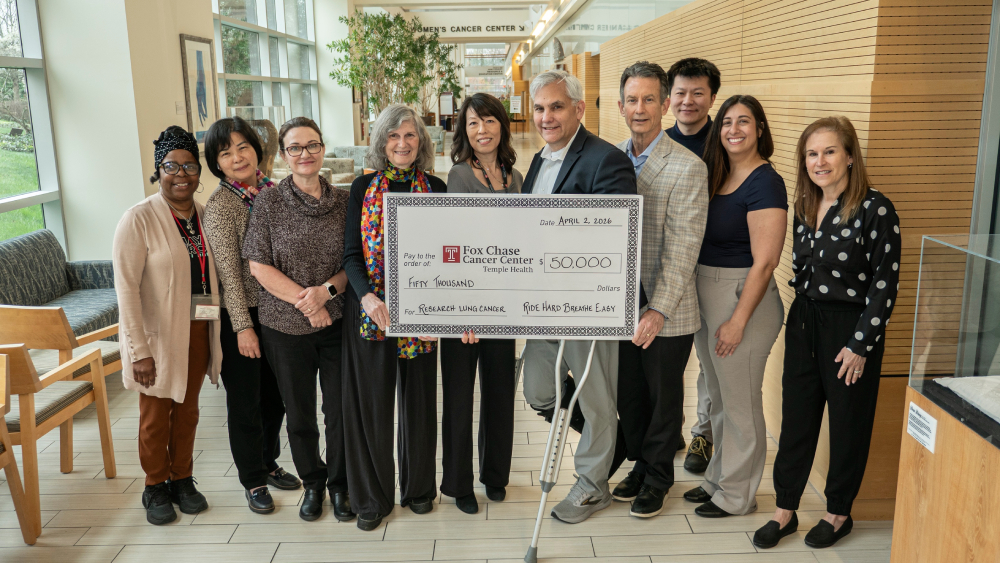
Carolyn Fang, PhD, Professor in the Cancer Prevention and Control Program at Fox Chase Cancer Center, has been recognized with the 2025 Innovation Award from Cheltenham, Pa.-based lung cancer nonprofit Ride Hard Breathe Easy (RHBE).
The Innovation Award is presented annually to a researcher at one of the eight RHBE partner hospitals to fund a project that aligns with the organization’s mission “to lighten the load for lung cancer patients with financial support and advocacy, in partnership with top cancer centers. ” Those presented with the award receive $50,000 to develop their projects.
“A lung cancer diagnosis can be all encompassing in the way that it affects patients’ lives,” noted RHBE founder John Matthews. “My family witnessed this firsthand when my mom was sick, and we are dedicated to helping others living with this disease by providing support for the resources needed to manage it.”
Expanding Access to Supportive Care for Patients With Lung Cancer
Fang received the award for her project “Expanding Access to Evidence-Based Supportive Care Interventions,” which will evaluate whether a six-week, online mindfulness-based program can reduce symptom burden and distress and improve quality of life for patients with lung cancer.
Often, patients with lung cancer live with ongoing symptoms such as tiredness, shortness of breath, poor sleep, and worry. One of the goals of Fang’s project is to make it easier for patients to benefit from mindfulness training by eliminating barriers to care like cost and transportation.
In addition, the study will examine whether participation in the program affects telomere length – a biomarker linked to aging and cancer outcomes – to better understand the potential biological benefits of mindfulness interventions.
“A lung cancer diagnosis changes everything—and the symptoms can follow people long after treatment ends,” said Fang. “My team and I are grateful for the support of Ride Hard Breathe Easy and the opportunity to partner with them to deliver a virtual program designed to help patients manage symptoms and their overall wellbeing.”
The Importance of Philanthropy
Since its establishment, Ride Hard Breathe Easy has raised more than $1.2 million to fund lung cancer research and programs that enhance patient care and quality of life; bestowed four awards, including the Innovation Award presented this year to Fang; and helped more than 3,000 patients.
“With the support of Ride Hard Breathe Easy, our mindfulness program has the potential to reach more people, especially those with limited mobility or transportation issues, to improve quality of life during a particularly difficult time,” said Fang. “Ultimately, the goal is to make these kinds of evidence-based supportive care programs more widely available in cancer care.”