When Colleen Coyne, MHA, spoke about her father’s heart surgery at Temple Health, she did not focus on the procedure itself. Instead, she described a quiet moment afterward: a nurse sitting beside his bed, gently holding his hand.
That, Coyne told attendees, was the patient experience.
“It’s not just the patient in the bed or the family in the waiting room. It’s the whole picture,” said Coyne, an Enterprise Advisor for Press Ganey, which is focused on patient, customer, and employee experience in healthcare.
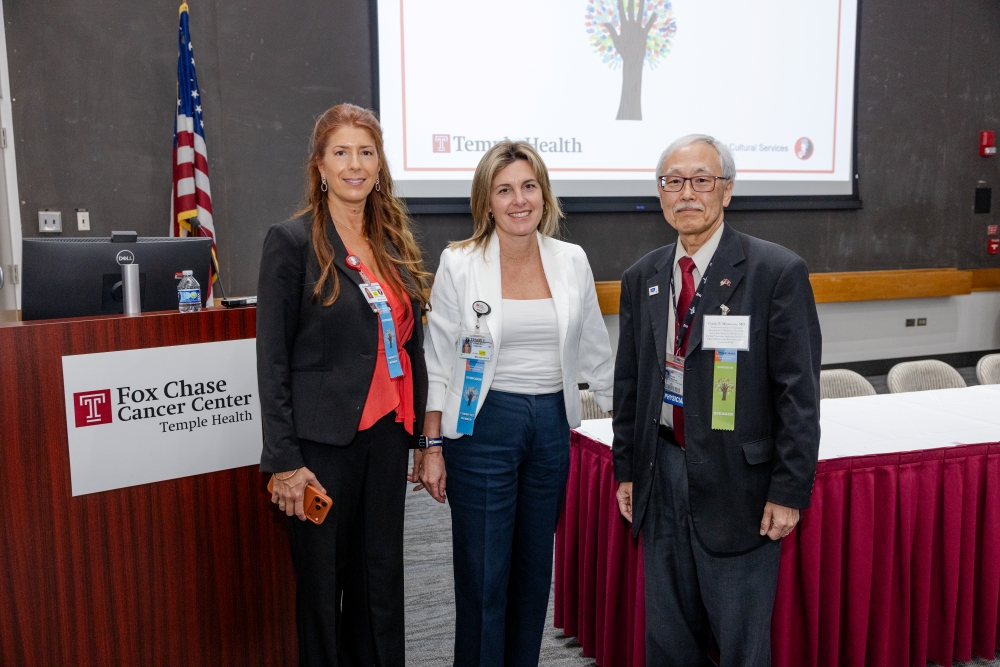
Coyne’s story became one of the defining moments of Temple Health’s 12th Annual Cultural Competence in Healthcare Symposium, held May 8 at Fox Chase Cancer Center’s Leidy Auditorium. Throughout the day, healthcare leaders, clinicians, and staff explored how patient stories and data together can shape more equitable, compassionate care.
Why Cultural Competence Matters
The theme of the symposium, which was hosted by Temple Health’s Department of Linguistic and Cultural Services, was Transforming Patient Care Through Cultural Awareness, Faith Sensitivity, Generational Understanding, Accessibility, and Elevated Patient Voices.
“Cultural competence is essential to providing high-quality care,” said Veronica Ferreira, MBA, BBA, CMI, SSGB, Director of Linguistic and Cultural Services. “The symposium is designed to give our clinicians and staff practical tools to better understand and respond to the diverse needs, preferences, and lived experiences of the patients and communities we serve.”
Kimberly Hanson, BSN, MHA, RNC-OB, NEA-BC, Vice President and Chief Experience Officer at Temple Health, welcomed attendees by emphasizing that culturally responsive care is foundational to improving safety, trust, and outcomes.
“As our patient population continues to grow in diversity, cultural confidence remains essential,” Hanson said. “It is central to building trust, improving outcomes, and strengthening how we serve our communities.”
Looking Beyond the Numbers
The symposium’s keynote session, From Data to Action: Segmenting Insights to Improve Outcomes for Every Patient, explored how healthcare systems can better understand patient experiences by looking beyond overall satisfaction scores.
In addition to Coyne, other presenters included:
- Susan Akinyi-Okumu, MBA, DNP, MPA, BSN, RN, CPXP, Associate Vice President of Patient Experience at Temple Health
- Nancy Abraham, BSN, RN, CPXP, Director of Patient Experience at Temple University Hospital
- Tori Scott, MADM/L, LSSGB, Advisor on Advisory and Client Success for Press Ganey
- Beth Deering, MSW, LSW, Chief Program and Impact Officer for VisionLink
- Jocelyn Edathil, MD, PhD, Associate Professor of Clinical Medicine at the Lewis Katz School of Medicine at Temple University
- Curtis Miyamoto, MD, Associate Director for Clinical Services, Fox Chase Cancer Center at Temple University Hospital
- John M. Travaline, MD, Director of the Pulmonary Procedure Unit at Temple University Hospital
- Shai Cherry, PhD, Rabbi at Congregation Adath Jeshurun
The panel encouraged attendees to examine patient experience data through a more detailed lens, including age, race, language, gender, and identity. Using national and Temple Health data, presenters demonstrated how small differences in patient-reported experiences can reveal larger disparities in communication, emotional support, and trust.
Older adults, particularly patients over age 80, were highlighted as one example. While they represent many inpatient survey respondents and face higher risks of adverse safety events, they often report fear or feelings of being unheard.
In addition, the speakers stressed that data is most meaningful when paired with patient stories and lived experiences, moments of compassion and connection that numbers alone cannot fully capture.
Sessions throughout the day explored accessibility for patients with vision loss, adapting care across generations, equity-focused clinical practices, and faith-based perspectives in healthcare, including Catholic and Jewish perspectives on ethics and end-of-life care.
Recognizing Longstanding Leadership and Service
Long-standing planning committee members were recognized for helping shape the symposium over the past 12 years, reflecting Temple Health’s continued commitment to equity and patient-centered care. The honorees included:
- Rose Miriello, Continuing Medical Education (CME) Coordinator for the Temple Health CME program
- Monica Kolb, MA, BCC, CT, Staff Chaplain for Temple University Hospital-Jeanes Campus
- Lucia Tono-Ramirez, MEd, JD, PhD, Manager of the Temple Health CME program
Carrying the Work Forward
By the close of the symposium, one message rang clear: culturally responsive care is not just an added layer of healthcare — it is essential to ensuring patients feel respected, understood, and supported.
The event concluded with a panel discussion and closing remarks reinforcing the importance of carrying both patient voices and data forward to build more compassionate and inclusive care.