Cancer care is entering a period of extraordinary change. New therapies are reaching patients at an accelerating pace, artificial intelligence is reshaping how clinicians access information, and questions of research funding, workforce pressures, cost, and access are increasingly intertwined with scientific progress.
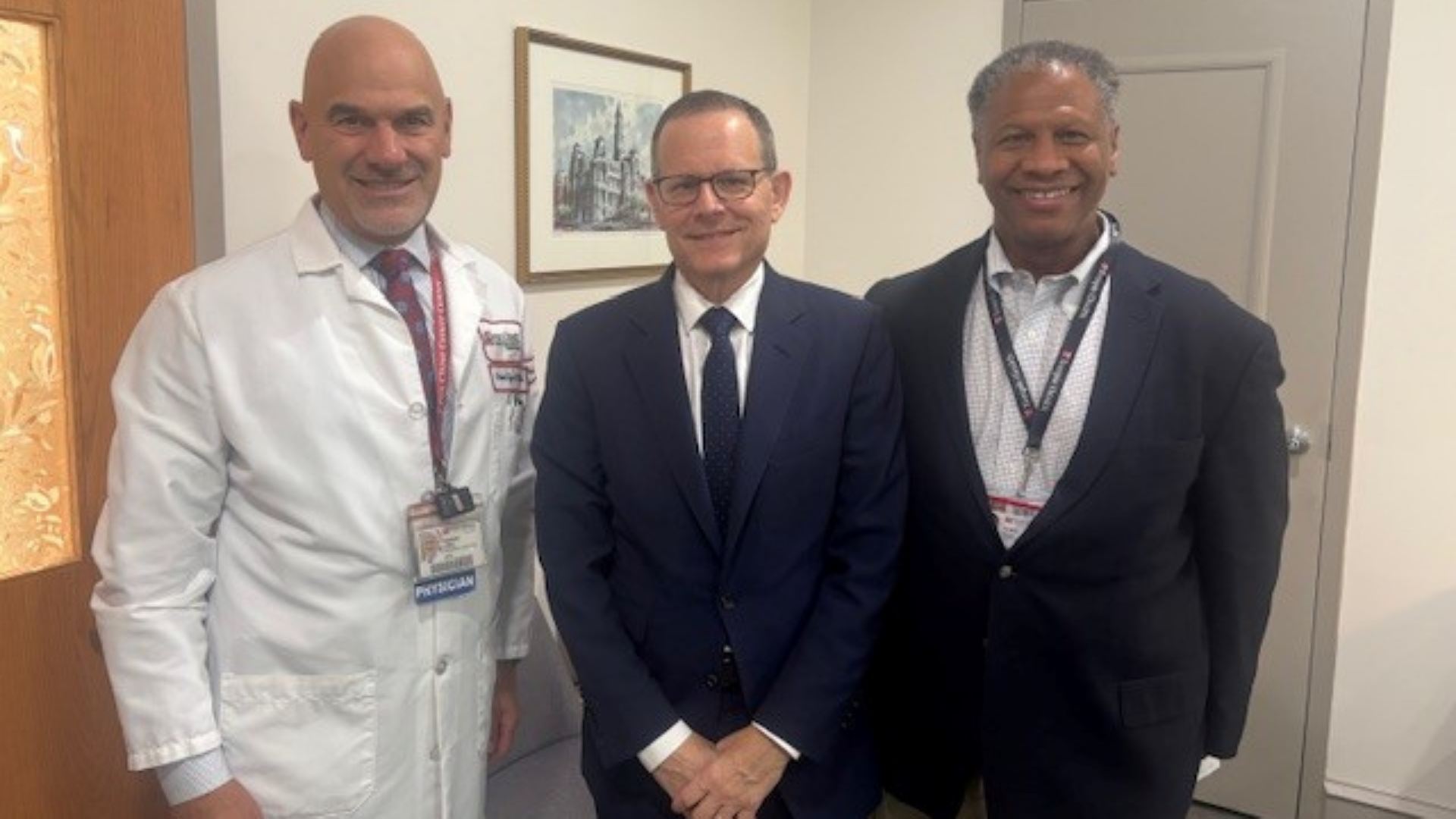
Those challenges, and the opportunities they create, were at the center of conversations at Fox Chase Cancer Center—Temple Health on September 30, when Clifford A. Hudis, MD, FACP, FASCO, chief executive officer of the American Society of Clinical Oncology (ASCO), visited Fox Chase to meet with leaders, faculty, early-career investigators, and community partners.
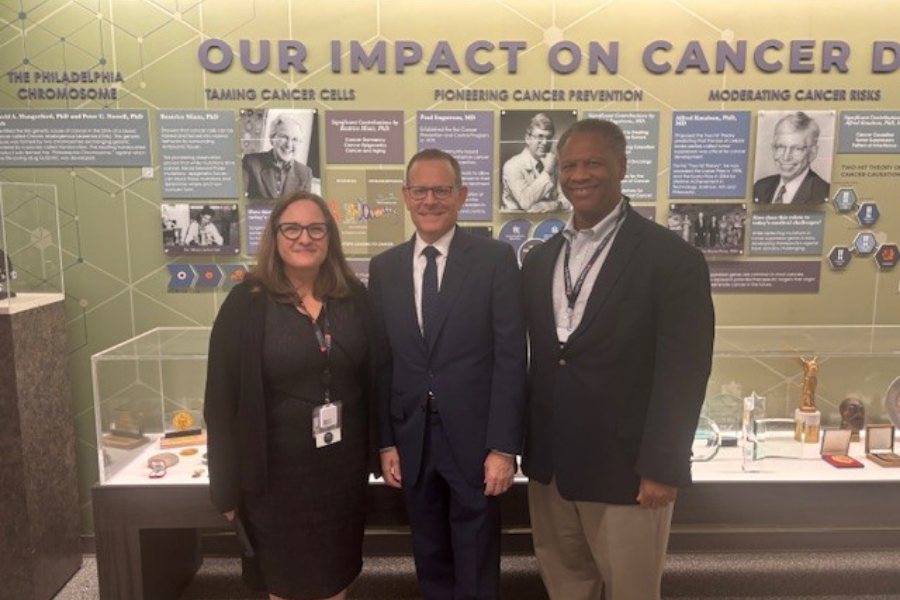
During a presentation on “The Role of Professional Societies in Advancing High-Quality Cancer Care” and discussions throughout the visit, Hudis explored how cancer centers and organizations such as ASCO can help the oncology community navigate a rapidly changing landscape while ensuring that advances in research and treatment ultimately reach patients and communities.
“Fox Chase has a long history of contributing to the national conversation about cancer research and care, and ASCO has been an important partner in that work,” said Robert G. Uzzo, MD, MBA, President and CEO of Fox Chase Cancer Center. “Cliff’s visit gave us an opportunity not only to showcase the extraordinary work of our faculty, but to talk about how Fox Chase, as part of Temple Health, and ASCO can work together to expand access to clinical research, develop the next generation of oncology leaders, and ultimately improve care for patients and communities.”
Navigating a rapidly changing era in cancer care
During his presentation, Hudis reflected on the remarkable scientific progress that has transformed cancer care, while also addressing challenges facing oncology, including research funding, rising costs, misinformation, workforce pressures, and the rapid emergence of artificial intelligence.
Hudis noted that the accelerating pace of new cancer therapies creates enormous opportunities for patients and increases the need to ensure that physicians have access to timely, trustworthy information. He discussed ASCO’s evolving role in education, research, quality improvement, professional development, and advocacy as the organization helps the oncology community navigate these changes.
Artificial intelligence is likely to change the way clinicians access medical knowledge and continuing education, he said, while emphasizing the enduring importance of high-quality evidence, peer review, and trusted professional organizations.
“Cliff has been a longtime friend and colleague, and an important voice in oncology,” said Robert A. Winn, MD, Cancer Center Director at Fox Chase. “What I especially appreciate is his understanding that scientific progress, ultimately, has to translate into better care for people and communities. That connection is central to what we are building at Fox Chase.”
Building on a longstanding relationship
Fox Chase faculty have a deep history of engagement with ASCO. Over the last decade, 58 Fox Chase faculty members have served in 288 roles across 98 ASCO volunteer groups. Today, 19 faculty members hold 23 roles across 20 volunteer groups, in addition to faculty participation on boards and committees and as presenters at ASCO meetings.
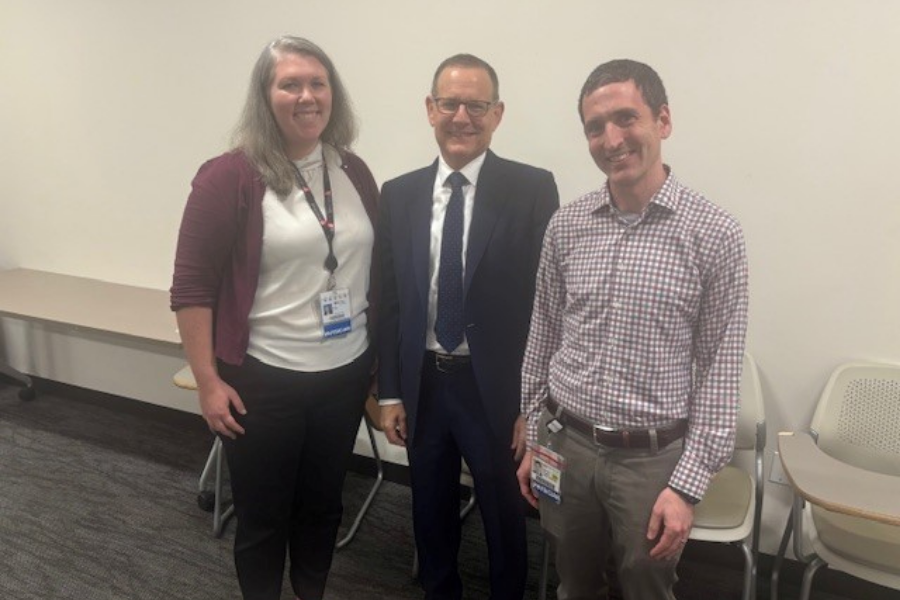
Fox Chase has also had six recipients of ASCO Career Development and Young Investigator Awards. During his visit, Hudis met with two of those investigators, Zachary Frosch, MD, MSHP, and Jenny O’Brien, MD, to discuss their work and the importance of supporting the next generation of cancer researchers.
An executive roundtable led by Elizabeth Plimack, MD, MS, Deputy Cancer Center Director, brought Hudis together with Fox Chase clinical, scientific, and administrative leaders for a broader discussion about the future of academic cancer centers and opportunities for Fox Chase faculty to contribute to ASCO’s scientific, educational, and leadership activities.
Connecting discovery with communities
The visit also included a discussion led by Charnita Zeigler-Johnson, PhD, MPH, Associate Director of Community Outreach and Engagement, that brought Hudis together with community partners. The conversation explored the importance of engaging communities in cancer research and outreach, understanding barriers to screening and care, and ensuring that programs are developed with the perspectives of the patients and communities they are intended to serve.
The discussion reflected Winn’s vision of moving cancer research “from bench to bedside to the block,” connecting scientific discovery and advances in treatment with the communities that stand to benefit from them.
“We are grateful to Cliff for spending this time with our faculty, leaders, investigators, and community partners,” Winn said. “There is tremendous opportunity for Fox Chase and ASCO to continue learning from one another and working together to ensure that the progress we are making against cancer reaches more people.”