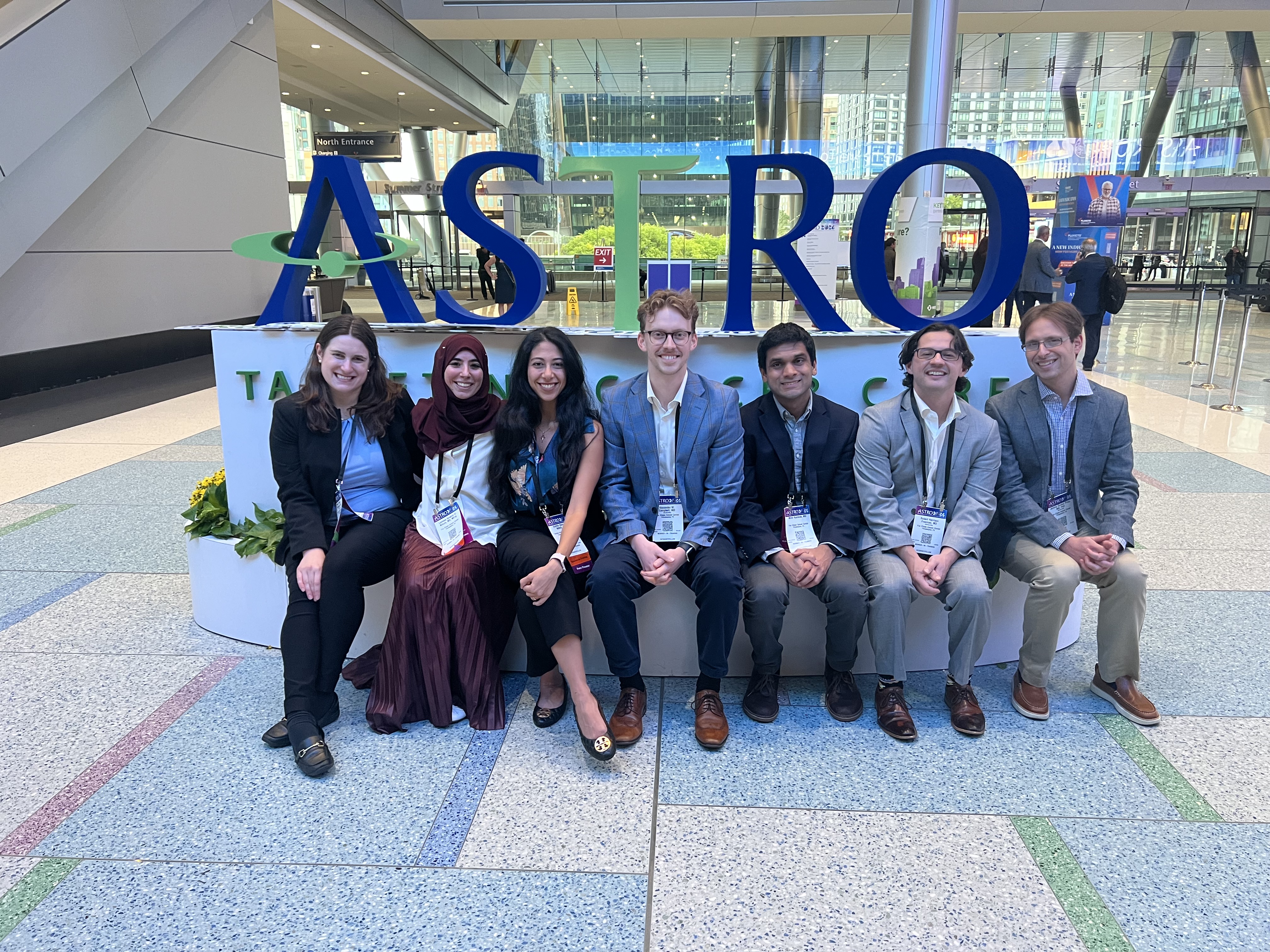
At the 2026 American Society for Radiation Oncology (ASTRO) Annual Meeting, physicians from the Fox Chase Cancer Center Radiation Oncology Department shared new research and clinical insights that underscored the future of radiation-based cancer care. Their presentations highlighted accurate radiation planning, treatment deintensification and advances in the field.
“These studies from our department demonstrate the importance of precision, and our ability now to protect adjacent normal structures while delivering clinically significant doses of radiation while treating multiple cancers,” said Eric Horwitz, MD, FABS, FASTRO, chair of the Department of Radiation Oncology at Fox Chase Cancer Center and the Lewis Katz School of Medicine at Temple University.
The Need for Precision as Radiation Treatment Becomes More Personalized
Although intensity-modulated radiation therapy (IMRT) is now standard in anal cancer treatment, accurate radiation planning remains challenging – especially in a rare disease where many clinicians see relatively few cases.
Joshua E. Meyer, vice chair of Translational Research and professor in the Department of Radiation Oncology presented new radiation quality assurance findings from EA2182, the DECREASE study, a randomized trial testing treatment de-intensification for early-stage anal cancer.
Meyer placed the findings in historical context, noting that while RTOG 0529 helped establish IMRT as a standard approach for anal cancer and demonstrated reduced toxicity, quality assurance review revealed that most submitted plans required replanning. As newer trials such as EA2182/DECREASE and PLATO-ACT4 explore whether radiation dose and target volumes can be safely optimized for early-stage disease, findings from EA2182 show that accurate contouring remains a significant challenge. In that trial, only 53% of 234 radiation plans were accepted on first submission, while 33% had major deviations requiring replanning.
Errors involved standard-of-care contouring of the primary tumor and nodal regions, and some affected staging or eligibility. The review found that individual physician experience and use of multiple contouring resources were associated with fewer deviations, underscoring the importance of real-time quality assurance, strong pelvic anatomy knowledge and targeted investigator education as anal cancer treatment moves toward more personalized radiation approaches.
Trending Topics in Radiation Oncology
Dose-Escalated PLDR Chemoradiation for Pancreatic Adenocarcinoma: Research presented by Radiation Oncology Resident Alexander Cambell, MD, evaluates pulsed low-dose-rate radiation therapy, an approach designed to safely deliver higher radiation doses while helping protect nearby bowel tissue. The trial found that this treatment strategy was feasible, generally well tolerated, and associated with strong surgical and pathologic outcomes, including successful margin-negative resections in all patients who underwent surgery. These findings support further study of PLDR as a potential way to improve treatment options for patients with pancreatic cancer.
Hydrogel Spacers Hold the Line: Rectal Wall Infiltration is Rare in Prostate SBRT: Research presented by Radiation Oncology Resident Mihir Karande, MD, examines the safety of hydrogel spacer placement in men receiving prostate stereotactic body radiotherapy. Hydrogel spacers are designed to help protect the rectum from radiation exposure, but rare complications such as rectal wall infiltration can occur. The study found that while radiographic rectal wall infiltration was observed, symptomatic cases, clinically significant rectal toxicity, and serious spacer-related complications were rare. These findings support the safety of hydrogel spacer placement for men receiving prostate SBRT.
Induction Immunotherapy (+/- Chemotherapy) in Inoperable Stage III Non-Small Cell Lung Cancer (NSCLC): Research presented by Radiation Oncology Resident Lamees El Nihum, MD, examines the use of induction immunotherapy, with or without chemotherapy, for patients with inoperable stage III non-small cell lung cancer who are not eligible for standard concurrent chemoradiotherapy. The study found that induction immunotherapy followed by definitive radiation therapy appeared safe and effective, with progression-free survival outcomes comparing favorably to prior treatment approaches. These findings support further investigation of induction immunotherapy strategies for both medically fit and higher-risk patients with stage III NSCLC.