Who comprises the next generation of cancer center leaders? How will cancer research, care, and administration continue to evolve under their direction?
Scientists and clinicians came together on July 16 at Virginia Commonwealth University Massey Comprehensive Cancer Center to discuss these complex questions – and the leadership skills necessary for effectively navigating the future of cancer centers – during the inaugural symposium of the Executive Leadership Academy for Cancer Centers (ELACC).
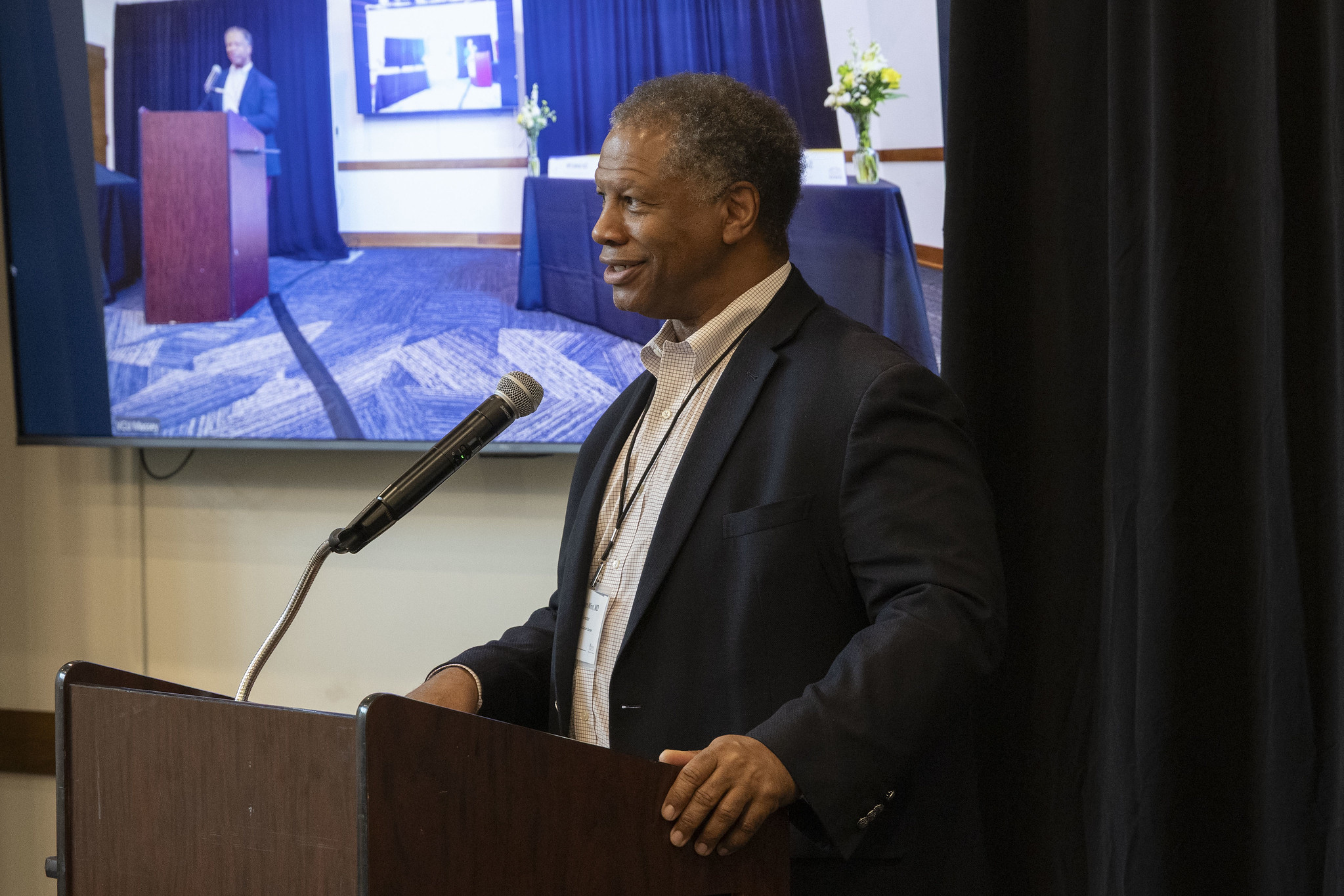
Robert A. Winn, MD, cancer center director of Fox Chase Cancer Center, delivered the symposium’s keynote address. A nationally recognized cancer center director and physician-scientist, Winn is integral to advancing innovation in cancer care and research at Fox Chase, one of the nation’s leading National Cancer Institute (NCI)-designated Comprehensive Cancer Centers.
In his keynote, Winn spoke about the importance of science and expanding research efforts not only to improve clinical outcomes, but also to create meaningful and lasting impact within communities.
ELACC is about preparing the next generation of cancer center leaders. This inaugural cohort represents the first generation of leaders who will help shape the next era of National Cancer Institute-designated cancer centers by combining scientific excellence, strategic vision, and a steadfast commitment to the communities we serve," said Winn.
Winn helped launch ELACC during his tenure as director of VCU Massey. The initiative is an 18-month academy with curriculum designed for individuals interested in learning more about the Cancer Center Support Grant (CCSG) and who aspire to become future leaders of NCI-designated cancer centers. ELACC fulfills this mission by providing emerging leaders with mentorship, strategic leadership development, and opportunities for cross-disciplinary collaboration.
As part of the symposium, ELACC fellows developed and presented capstone projects focused on a mutual area of interest and need shared by the fellow and their cancer center. Each project was intentionally aligned with the cancer center’s strategic plan, ensuring that the work addressed institutional priorities while also fostering the fellows’ professional growth and leadership development.
Panel discussions throughout the symposium explored a range of topics related to leadership development and career advancement in cancer research and administration. Fellows reflected on the leadership skills they developed through ELACC, the hurdles they faced as clinical investigators, and how the program changed the way they think about community members and how to engage them effectively in research.