Beyond BRCA1/2: Using AI to Uncover the Hidden Architecture of Hereditary Cancer Risk

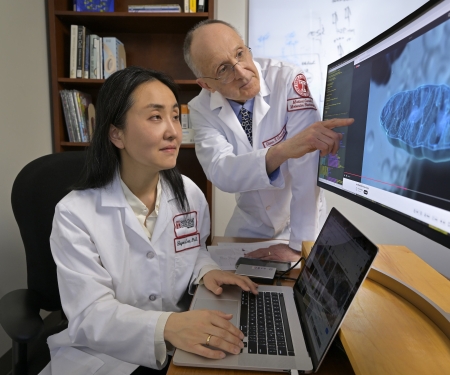
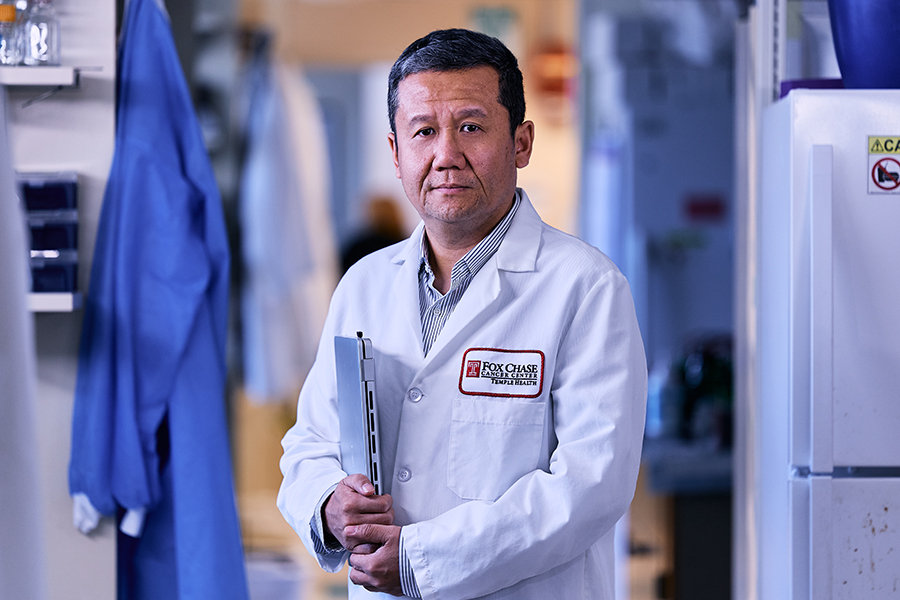
Yu “Sunny” Liu, PhD, Director of Bioinformatics at the Biostatistics and Bioinformatics Facility

A Fox Chase Cancer Center team is combining a rare longitudinal family cohort, whole-genome sequencing, AI-guided analysis, and laboratory validation to investigate why people with similar inherited susceptibility can experience very different cancer outcomes.

A pathogenic variant in BRCA1 or BRCA2 can substantially increase a person’s lifetime risk of breast, ovarian, or other cancers. Yet the variant alone does not determine what happens next. Within the same family, one person may develop cancer early in life while another remains cancer-free for decades. Other families have a strong history of cancer despite negative results on broad multigene testing, suggesting that important contributors to risk remain undiscovered.

With pilot funding in place, investigators at Fox Chase Cancer Center have begun the study. Led by Yu “Sunny” Liu, PhD, with co-principal investigators Michael J. Hall, MD, MS, FASCO, and Neil Johnson, PhD, the project initially focuses on breast and ovarian cancer in families with inherited cancer-predisposition variants. Its framework could ultimately be applied to other hereditary cancers and predisposition genes.

Interrogating the “dark” genome.

Most clinical genetic testing focuses on protein-coding regions, which represent only a small portion of the human genome. The remaining noncoding genome contains regulatory elements that help control how genes function, but interpreting variation across this vast genomic space remains difficult.

The research pipeline connects three stages:

  • Sequence: Use whole-genome sequencing to examine approximately 200 samples expected to represent more than 100 families, including families with contrasting outcomes such as early-onset cancer and long-term cancer-free survival.
  • Prioritize: Apply AlphaGenome and complementary computational tools to identify coding and noncoding variants predicted to have biological consequences. Those predictions will be integrated with family relationships, clinical histories, and pathology.
  • Validate: Test the strongest candidates through CRISPR-based genome engineering, DNA-repair assays, and mammary gland organoid models to determine whether those methods produce measurable biological effects.

The team has completed a proof-of-principle test using a previously published BRCA1 promoter variant known to regulate BRCA1 expression. AlphaGenome identified the expected regulatory consequences, providing preliminary evidence that the pipeline can recognize biologically meaningful effects of noncoding variants. This validates the analytical approach, not the discovery of a new BRCA1 risk variant.

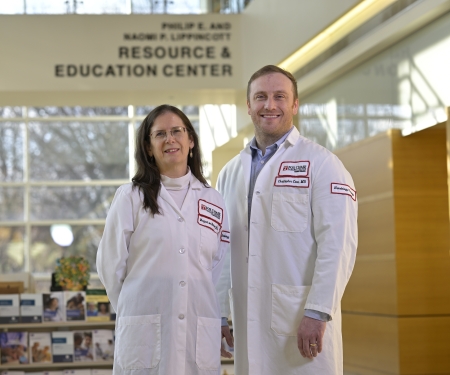
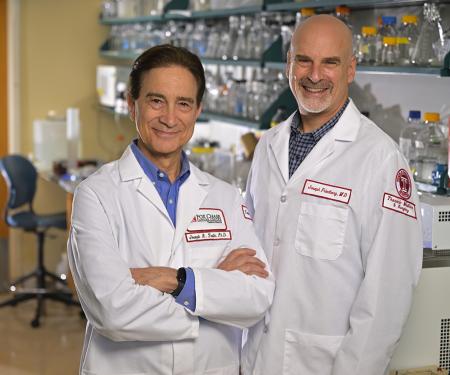
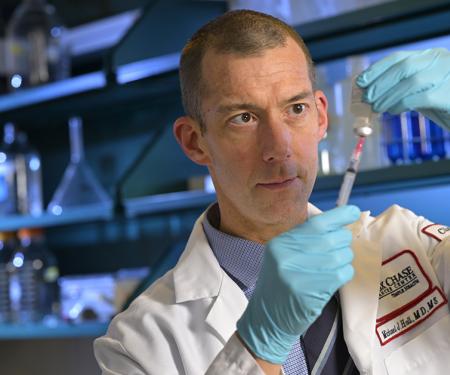
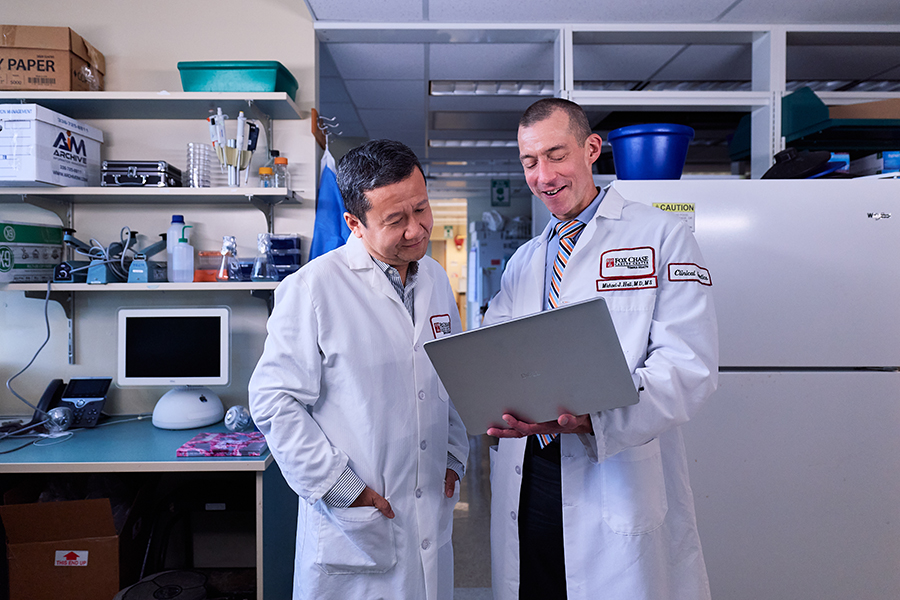
Yu “Sunny” Liu, PhD, Director of Bioinformatics at the Biostatistics and Bioinformatics Facility and Michael J. Hall, MD, MS, FASCO, Chair of the Department of Clinical Genetics
Yu “Sunny” Liu, PhD, Director of Bioinformatics at the Biostatistics and Bioinformatics Facility and Michael J. Hall, MD, MS, FASCO, Chair of the Department of Clinical Genetics.

From prediction to biological mechanism.

AI-guided analysis is a discovery tool, not a substitute for scientific evidence, genetic counseling, or established risk models. The project first asks which variants are likely to have biological consequences and then tests whether those prioritized variants improve risk assessment. Experimental validation is essential because computational prediction alone cannot establish that a variant influences gene regulation, cellular function, or cancer risk.

The collaboration brings together distinct Fox Chase strengths. Liu leads AI-guided genomic analysis and studies genome folding and epigenetic regulation. Co-investigator Yan Zhou, PhD, contributes computational expertise. Hall, chair of Clinical Genetics, brings hereditary cancer expertise and access to deeply characterized families and biospecimens. Johnson contributes expertise in BRCA1/2 biology, DNA repair, and organoid systems.

A cohort that cannot be readily replicated.

Fox Chase is a founding member of the Breast Cancer Family Registry. Within the Department of Clinical Genetics, it is the largest and longest-running research endeavor. Many participants entered through clinical care at Fox Chase, connecting family relationships and biospecimens with decades of follow-up. Some BRCA1/2 families have been followed for 20 to 30 years.

Longitudinal cohorts are rare; family-based cohorts extending across decades are rarer still. This resource makes it possible to compare relatives who share inherited susceptibility but experience very different outcomes—questions that single-observation or single-time-point databases cannot readily answer.

Toward precision cancer prevention.

The pilot is designed to produce a whole-genome dataset, a ranked set of candidate modifiers, and experimental evidence about the strongest candidates. Findings would require replication in larger, independent, and ancestrally diverse cohorts before any modifier could be considered for clinical use. The study is not intended to change current clinical management.

The longer-term opportunity is more precise cancer prevention: refining individual risk estimates and informing future approaches to counseling, surveillance, and risk reduction. By linking clinical genetics, longitudinal family data, AI-guided genomics, and experimental biology, Fox Chase is building a framework that moves from association to mechanism—and advances the science needed to understand not only who inherits cancer susceptibility but also why that susceptibility becomes cancer in some people and not others.

Become Part of Tomorrow’s Cancer Care Today

As one of the four original cancer centers to receive comprehensive designation from the National Cancer Institute, Fox Chase Cancer Center has been at the forefront of cancer research for more than 100 years. With a singular focus on cancer, we combine discovery science with state-of-the-art clinical care and population health.

Interested in joining our world-class research team to advance the fight against cancer?
View Careers in Research →

Related Stories